Home / Science / Neanderthals Were Not So Dumb: DNA, Art, and Hybrid Children Emerge
Neanderthals Were Not So Dumb: DNA, Art, and Hybrid Children Emerge
3 Jan
Summary
- Hybrid children suggest early and deep intermingling between Homo sapiens and Neanderthals.
- Neanderthals created art and jewelry tens of thousands of years before Homo sapiens.
- New studies indicate Neanderthals had diverse diets and complex hunting strategies.
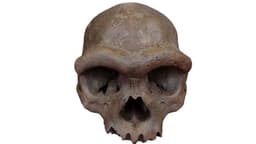
Our ancient human relatives, Neanderthals, are making a significant comeback in scientific discourse, with over a dozen studies in 2025 reshaping our understanding of their existence. Far from being unintelligent brutes, new research highlights their capacity for art, complex social behaviors, and even interbreeding with Homo sapiens. This evolving perspective challenges long-held assumptions about human evolution and Neanderthal capabilities.
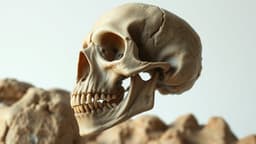
Key findings include evidence of sophisticated symbolic behavior, such as Neanderthals independently creating cave art and jewelry as early as 65,000 years ago in Spain. Furthermore, a 140,000-year-old skeletal remains of a child from Israel may represent a hybrid with one Homo sapiens parent and one Neanderthal parent, suggesting extensive intermingling much earlier than previously believed. This challenges the idea of Neanderthals being rapidly replaced by modern humans.
Recent research also indicates Neanderthals were skilled hunters with diverse diets, employing advanced strategies like cliff drives and bone marrow extraction. Evidence also points to the use of ochre for drawing, including a sharpened yellow 'crayon' dating to approximately 42,000 years ago. Even their social interactions are being re-examined, with genetic and physiological data suggesting that kissing, a behavior rooted in primate evolution, was likely practiced between Neanderthals and Homo sapiens.