Home / Science / NASA Shifts Moon Landing Role: SpaceX Starship Takes Center Stage
NASA Shifts Moon Landing Role: SpaceX Starship Takes Center Stage
20 Mar
Summary
- NASA may reduce Boeing's role in the Artemis program.
- SpaceX's Starship rocket could be key for lunar orbit propulsion.
- The Artemis program aims to return humans to the moon by 2028.

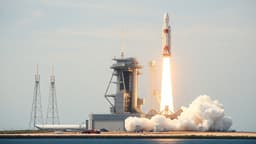
NASA is reportedly reassessing its Artemis program, with considerations to reduce Boeing's involvement and assign a more critical role to SpaceX's Starship rocket for lunar missions. The proposed changes aim to accelerate the program's objective of returning humans to the moon by 2028, an initiative that has faced persistent delays and budget issues.
The current strategy involves Boeing's Space Launch System (SLS) rocket launching the Orion crew capsule with astronauts to lunar orbit. A SpaceX Starship lander would then rendezvous with Orion for the descent to the moon's surface. The potential new plan would see Starship docking with Orion in Earth orbit and then propelling the capsule towards lunar orbit.
This shift could represent another setback for Boeing's SLS program, which has been central to NASA's human spaceflight endeavors. SpaceX would have a compressed timeline to finalize Starship's development, as the rocket has yet to complete a successful orbital flight with a crew. NASA administrator Bill Nelson plans to discuss these evolving plans with industry partners.
While NASA states its commitment to the SLS architecture through Artemis V, the agency is exploring options to expedite the return of astronauts to the moon. The revised SpaceX plan also involves Orion entering a different lunar orbit, a low-lunar orbit, rather than the previously intended near-rectilinear halo orbit.