Home / Science / Mount Fuji: Earth's 'Health Checkup' Amid Microplastic Threat
Mount Fuji: Earth's 'Health Checkup' Amid Microplastic Threat
13 Nov
Summary
- Researchers use Mount Fuji's summit for vital Earth observations.
- Microplastics discovered in air and snow on Japan's tallest peak.
- Funding shortages threaten year-round observations at the research station.
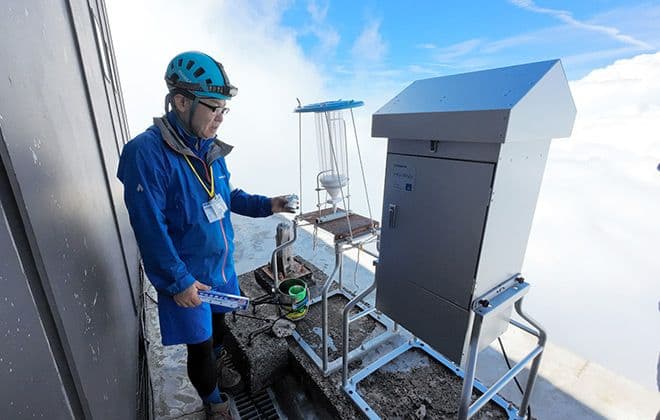
High atop Mount Fuji, researchers are utilizing the summit as a critical observation point, often described as a 'health checkup on the Earth.' This unique location allows for the study of atmospheric science, meteorology, and cosmic radiation, collecting samples of airborne pollutants like yellow sand and soot from distant fires. Since 2007, the Mount Fuji Research Station (MFRS) has facilitated numerous research projects, including recent discoveries of airborne microplastics in 2019.
These microplastics, found in both the air and lingering snow, indicate the global scale of plastic pollution. Researchers theorize that winds carry these particles from areas like China and Southeast Asia. Despite the scientific value, the MFRS faces financial difficulties. The facility requires over 60 million yen annually for operations, but relies heavily on researchers covering expenses through their own funding, memberships, and donations, severely limiting year-round observational capabilities due to power constraints.


