Home / Science / Jefferson's Hidden Brick Kiln Unearthed at Monticello
Jefferson's Hidden Brick Kiln Unearthed at Monticello
13 Apr
Summary
- An early brick kiln from the 1770s was discovered at Monticello.
- The kiln predates the Declaration of Independence and Monticello I.
- Slave labor was crucial to the kiln's operation.
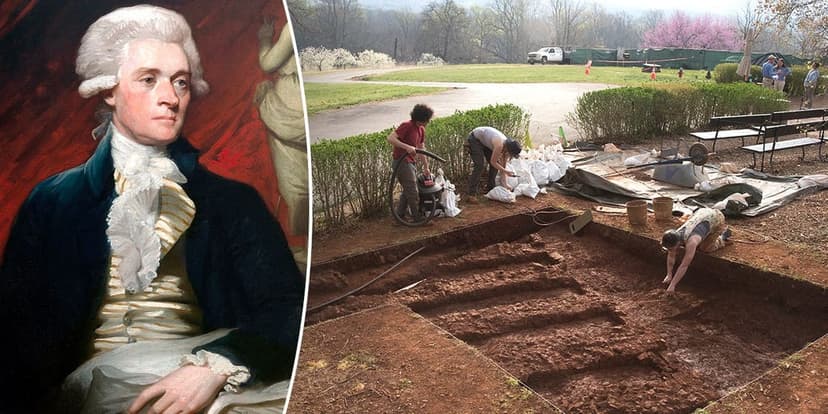
Archaeologists have unearthed a significant remnant of Thomas Jefferson's era: a brick kiln used in the initial construction of Monticello. The kiln, believed to date to the early 1770s, predates Jefferson's famous Declaration of Independence. It was a crucial part of building Monticello I, the first iteration of his famed estate.
The discovery was made during an excavation that began in March on the east side of the home. Researchers found brick channels and hardened soil, indicative of a large oven used to fire thousands of bricks. These bricks were then transported to build the house.
This operational kiln, likely managed by White workmen George Dudley or William Bishop, heavily utilized slave labor. While Jefferson did not personally oversee the firing, records indicate he was aware of the kiln's existence and calculated its efficiency for brick production.
The site yielded few artifacts besides bricks, but included special decorative bricks with curved and S-shaped profiles, matching those used in the dining room exterior around 1772. Their discovery near the kiln confirms its early 1770s construction date and provides a deeper understanding of Monticello's building process.


