feedzop-word-mark-logo
searchLogin
Feedzop
homeFor YouUnited StatesUnited States
You
bookmarksYour BookmarkshashtagYour Topics
Trending
Terms of UsePrivacy PolicyAboutJobsPartner With Us

© 2026 Advergame Technologies Pvt. Ltd. ("ATPL"). Gamezop ® & Quizzop ® are registered trademarks of ATPL.

Gamezop is a plug-and-play gaming platform that any app or website can integrate to bring casual gaming for its users. Gamezop also operates Quizzop, a quizzing platform, that digital products can add as a trivia section.

Over 5,000 products from more than 70 countries have integrated Gamezop and Quizzop. These include Amazon, Samsung Internet, Snap, Tata Play, AccuWeather, Paytm, Gulf News, and Branch.

Games and trivia increase user engagement significantly within all kinds of apps and websites, besides opening a new stream of advertising revenue. Gamezop and Quizzop take 30 minutes to integrate and can be used for free: both by the products integrating them and end users

Increase ad revenue and engagement on your app / website with games, quizzes, astrology, and cricket content. Visit: business.gamezop.com

Property Code: 5571

Home / Science / Massive 3,000-Year-Old Maya Complex Discovered in Mexico

Massive 3,000-Year-Old Maya Complex Discovered in Mexico

10 Nov, 2025

•

Summary

  • Vast ancient Maya complex Aguada Fénix discovered in 2020
  • Largest architectural site of the Maya civilization, built 3,050 years ago
  • Represents the cosmos and ritual calendar of the early Maya
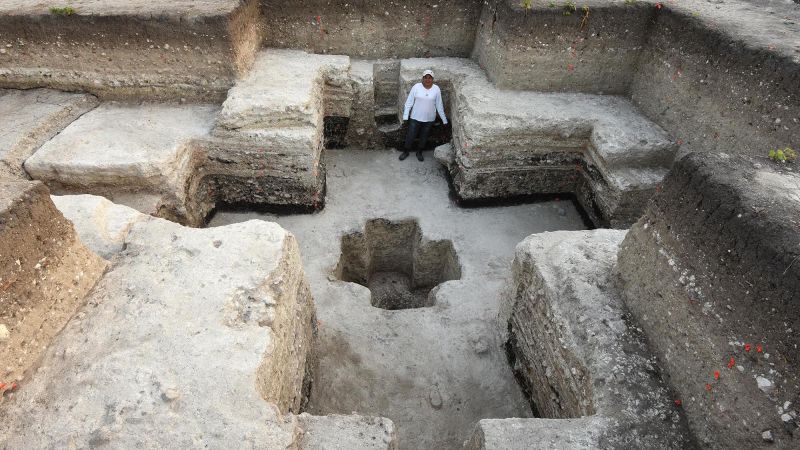
Massive 3,000-Year-Old Maya Complex Discovered in Mexico

Five years ago, a vast and ancient Maya complex called Aguada Fénix was discovered in southeastern Mexico, hidden for millennia by forest and fields. Archaeologists have now revealed more secrets about this monumental structure, which was built 3,050 years ago and used for around 300 years.

The site features an artificial plateau made from earth, with connecting causeways, canals, and corridors. Larger than later Mesoamerican cities like Tikal and Teotihuacán, Aguada Fénix was a representation of how the Maya community conceived the universe. At the center is a cruciform-shaped pit containing precious ritual artifacts, with colored pigments thought to represent the four cardinal directions.

Researchers believe the east-west axis of the site was aligned with the sunrise on October 17 and February 24, suggesting it served as an important ritual calendar for the early Maya. The sheer scale of the construction, involving over 1,000 people working for years, is remarkable given the lack of evidence for a social hierarchy or powerful rulers at the site.

trending

Ozark Trail stoves recalled

trending

Gale warning issued for Ireland

trending

Bears stun Green Bay Packers

trending

NFL playoff bracket updated

trending

Hornets rout Jazz 150-95

trending

Switzerland reaches United Cup final

trending

Svitolina reaches Auckland final

trending

Hurkacz leads Poland to title

This discovery provides a new understanding of the beginnings of Maya civilization, which would later reach its height between AD 400 and 900. The findings challenge the perception that large-scale construction in the past required hierarchical organization, showing that ancient communities could also organize themselves to accomplish monumental feats.

Disclaimer: This story has been auto-aggregated and auto-summarised by a computer program. This story has not been edited or created by the Feedzop team.
The Aguada Fénix is a massive 3,050-year-old Maya complex discovered in southeastern Mexico, which is the oldest and largest architectural site of the ancient Maya civilization.
The Aguada Fénix was spotted from an airplane by remote sensing equipment in 2020, having been hidden from view for millennia by forest and fields.
The Aguada Fénix suggests the early Maya had a sophisticated understanding of the cosmos and ritual calendar, as the site features a cruciform pattern and alignment with the sunrise on key dates. It also challenges the notion that large-scale construction required hierarchical organization in the past.

Read more news on

Scienceside-arrowMexicoside-arrow

You may also like

Italy Braces for Winter's Icy Grip

5 Jan • 31 reads

article image

Kurukshetra: Winter Haven for 50+ Migratory Bird Species

5 Jan • 36 reads

article image

Manali's Fake Snow Scam Sparks Outrage

17 Dec, 2025 • 104 reads

article image

Caribbean's Secret Shores: Off-Grid Exploration

29 Nov, 2025 • 206 reads

article image

Rosalía's Mexican Adventure: From Pozole to Tattoos with Latin Mafia

31 Oct, 2025 • 218 reads

article image