Home / Science / Mars Rover Finds Organic Clues to Ancient Life
Mars Rover Finds Organic Clues to Ancient Life
6 Jul
Summary
- Organic carbon, crucial for life, was detected in Martian mudstone.
- The carbon was found in Jezero Crater, an ancient lake bed.
- Further sample analysis on Earth is needed to confirm life's origin.
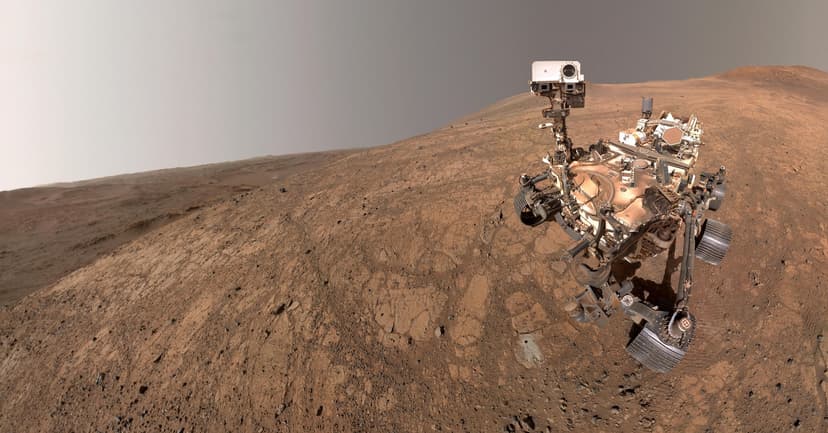
Using NASA's Perseverance rover, scientists are gaining a deeper understanding of organic carbon found on Mars, a key component for known life forms. Recent research details the structure of organic carbon detected in sedimentary rock within Jezero Crater. This mudstone, formed between 3.2 and 3.8 billion years ago, potentially holds a biosignature.
The organic carbon discovered is described as macromolecular and bears similarities to carbon formed through both biological and nonbiological processes on Earth, as well as abiotic processes found in meteorites. This marks the first discovery of macromolecular carbon in Jezero Crater's mudstones. Previously, the Curiosity rover found similar carbon at Gale Crater, approximately 3,700 km away.
Scientists note that the findings suggest organic materials and habitability may have been widespread on ancient Mars. However, they stress that this discovery does not prove life existed on the planet, as organic carbon can also form through geological processes. The rover's current instruments cannot definitively determine the origin of this carbon.
To confirm whether the carbon is a result of biological activity, the samples collected by Perseverance must be returned to Earth for more advanced laboratory analysis. Mars, now cold and desolate, once had a thicker atmosphere and warmer climate with liquid water, conditions that could have supported life.


