Home / Science / Manta Rays' Secret Migrations Revealed
Manta Rays' Secret Migrations Revealed
22 Oct
Summary
- Juvenile manta rays stay close to Costa Rican shores.
- Adult mantas undertake journeys spanning hundreds of kilometers.
- Coastal cleaning stations serve as social hubs for mantas.
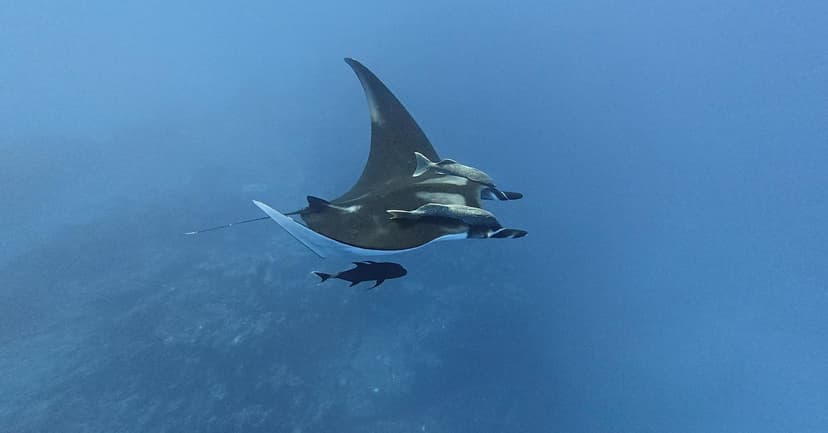
Endangered oceanic manta rays exhibit varied movement patterns, with juveniles staying near Costa Rica's coast while adults travel hundreds of kilometers. Researchers utilized acoustic transmitters and satellite tags between 2018 and 2025 to map these movements.
Smaller mantas, measuring around 3 to 3.5 meters, stayed within Costa Rica's exclusive economic zone. In contrast, mature animals, around 4 to 4.5 meters, journeyed as far as Guatemala. Scientists hypothesize that juveniles avoid long migrations due to threats from predators like orcas and tiger sharks.
Coastal cleaning stations, rocky reefs where small fish remove parasites, appear to be vital social hubs for manta rays. These sites are repeatedly visited for feeding, courtship, and mating, though navigation methods remain unknown. The study also suggests Central America may host a distinct manta ray population, separate from those in Ecuador or Mexico.
Mantas are vulnerable due to slow reproduction. Beyond protected coastal havens and Cocos Island, they enter unprotected waters, facing risks from fishing and vessel traffic. Protecting the marine corridors they travel is critical for their survival.


