Home / Science / Lizard Colors Signal Evolutionary Shift
Lizard Colors Signal Evolutionary Shift
28 Feb
Summary
- New lizard variant may endanger three ancient color morphs.
- Conservation projects aim to save endangered Aeolian wall lizards.
- Within-species biodiversity is crucial for adaptation and survival.
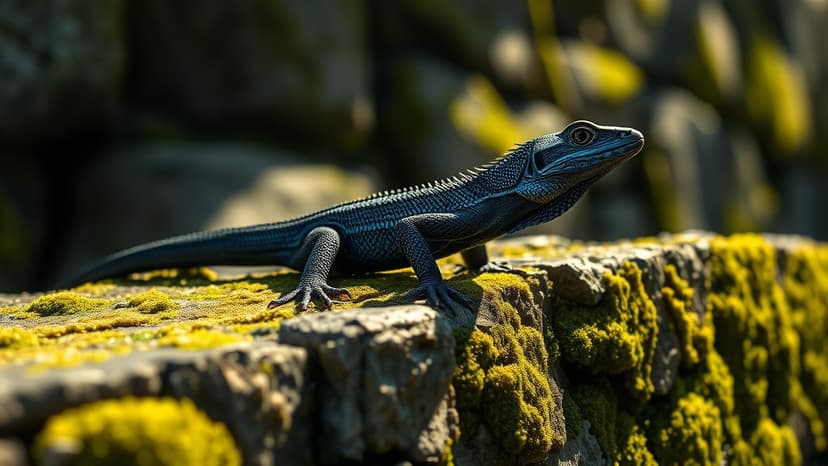
Researchers are observing a potential evolutionary shift within species, exemplified by the common wall lizard in Italy. A recently identified, larger, and more aggressive variant, known as nigriventris, could disrupt a delicate balance that has existed for millions of years among three existing color morphs (white, yellow, and orange). This emergence risks driving the older variants towards extinction.
This phenomenon underscores the complexity of biodiversity, extending beyond species counts to variations within them. Such diversity—genetic, behavioral, and morphological—is vital for a species' ability to adapt to challenges. Conservation biologists emphasize that preventing the erosion of this within-species diversity is central to saving species.
In parallel, significant conservation efforts are focused on the Aeolian wall lizard, a critically endangered species in Italy's Aeolian archipelago. Threats include habitat degradation and invasive species, particularly the Italian wall lizard, which outcompetes the native populations. The Life Eolizard project aims to restore habitats, control invasive species, and implement captive breeding programs.
The captive breeding initiative, involving distinct Aeolian lizard populations, began in 2025 with the production of 64 juveniles. These efforts aim to maximize genetic diversity for successful reintroduction into protected island sanctuaries. The creation of these safe havens is a pivotal step toward ensuring the long-term survival and expanded distribution of the Aeolian wall lizard.