feedzop-word-mark-logo
searchLogin
Feedzop
homeFor YouUnited StatesUnited States
You
bookmarksYour BookmarkshashtagYour Topics
Trending
Terms of UsePrivacy PolicyAboutJobsPartner With Us

© 2026 Advergame Technologies Pvt. Ltd. ("ATPL"). Gamezop ® & Quizzop ® are registered trademarks of ATPL.

Gamezop is a plug-and-play gaming platform that any app or website can integrate to bring casual gaming for its users. Gamezop also operates Quizzop, a quizzing platform, that digital products can add as a trivia section.

Over 5,000 products from more than 70 countries have integrated Gamezop and Quizzop. These include Amazon, Samsung Internet, Snap, Tata Play, AccuWeather, Paytm, Gulf News, and Branch.

Games and trivia increase user engagement significantly within all kinds of apps and websites, besides opening a new stream of advertising revenue. Gamezop and Quizzop take 30 minutes to integrate and can be used for free: both by the products integrating them and end users

Increase ad revenue and engagement on your app / website with games, quizzes, astrology, and cricket content. Visit: business.gamezop.com

Property Code: 5571

Home / Science / Vines Evolved Before Arrival: A New Evolutionary Twist

Vines Evolved Before Arrival: A New Evolutionary Twist

7 Feb

•

Summary

  • Lipstick vines in Taiwan evolved shorter flowers before spreading there.
  • This contradicts the established Grant-Stebbins evolutionary model.
  • Researchers discovered rodent pollination in Vietnam, a first for this genus.
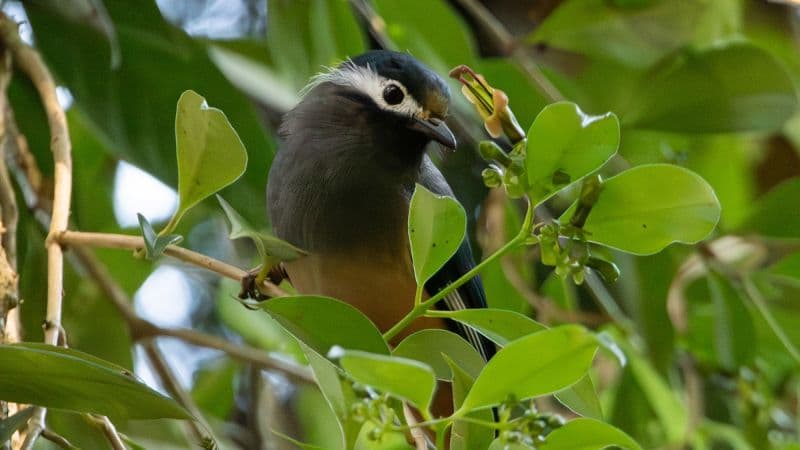
Vines Evolved Before Arrival: A New Evolutionary Twist

Plant biologists have uncovered surprising evidence about lipstick vines, specifically a species with green flowers found in Taiwan. Unlike what was expected, these plants evolved shorter, wider flowers before they spread to Taiwan, a finding that challenges the long-standing Grant-Stebbins evolutionary model. This model typically describes how pollinators drive the formation of new species.

The research indicated that while mainland Asia has sunbirds capable of pollinating long, red flowers, the green-flowered lipstick vines (Aeschynanthus acuminatus) evolved in isolation. Their shorter, wider flowers in Taiwan were pollinated by birds with shorter beaks, adapting to local wildlife. This evolution occurring prior to migration suggests alternative explanations for species diversification.

Further fieldwork also yielded an unexpected discovery in Vietnam, where researchers observed rodents pollinating the lipstick vines. This marks the first documented instance of rodent pollination within this plant genus, highlighting the complex ecological interactions surrounding these plants. The study continues to explore these intricate relationships.

Disclaimer: This story has been auto-aggregated and auto-summarised by a computer program. This story has not been edited or created by the Feedzop team.
Lipstick vines in Taiwan evolved shorter, wider green flowers before they spread to the island, a deviation from the typical evolutionary model.
The Grant-Stebbins model explains how pollinators can drive the formation of new species, suggesting plants adapt to local pollinators after migrating.
Researchers documented rodents pollinating lipstick vines in Vietnam, marking the first known instance of rodent pollination in this plant genus.

Read more news on

Scienceside-arrowTaiwanside-arrowVietnamside-arrow
trending

Liverpool, City crucial encounter

trending

Kamindu Mendis rescues Sri Lanka

trending

Sam Curran holds nerve

trending

Nice vs Monaco Ligue 1

trending

Buttler reflects on England career

trending

Shanaka focused on World Cup

trending

Aasif Sheikh and Salman Khan

trending

Sri Lanka faces Ireland opener

You may also like

Warmer World Sickens Monarchs, Threatens Food Supply

2 Feb • 35 reads

article image

New Micro-Crab Species Found in India

18 Jan • 100 reads

article image

Triceratops Once Roamed Europe, Fossils Reveal

10 Jan • 156 reads

article image

New Species Discovered: Many Already Face Extinction

8 Jan • 178 reads

article image

Extinct Fish Species Found Alive in Bolivia!

24 Dec, 2025 • 212 reads

article image