Home / Science / Solar-Powered Sea Slug Steals Algae's Power!
Solar-Powered Sea Slug Steals Algae's Power!
5 Aug
Summary
- Leaf sheep perform photosynthesis using stolen algae chloroplasts.
- These sea slugs store chloroplasts in back structures called cerata.
- The species was scientifically described in 1993 and is now popular.
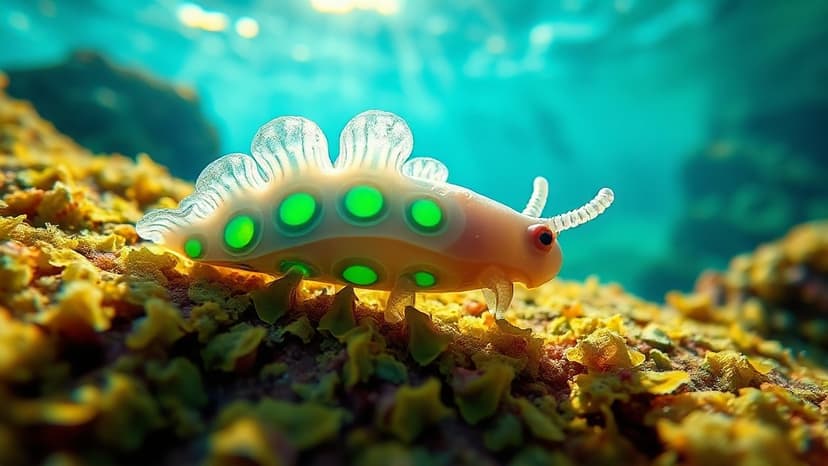
The leaf sheep, or sea sheep (Costasiella kuroshimae), is a minuscule sea slug, roughly the size of a grain of rice. It inhabits tropical waters near Japan, Indonesia, and the Philippines. This creature possesses an extraordinary ability: kleptoplasty. It incorporates chloroplasts from the algae it grazes into its own cells, enabling it to photosynthesize and generate energy from sunlight.
These stolen chloroplasts are housed within the slug's cerata, which are leaf-like appendages on its back. These structures effectively function as biological solar panels. The leaf sheep's vivid green coloration, derived from its cerata, provides camouflage against the algae it feeds on. Its rhinophores, ear-like tentacles, aid in locating food and navigating its environment.
First identified by science in 1993, the leaf sheep has experienced a surge in popularity. Advances in underwater photography have revealed its captivating appearance, leading to comparisons with popular culture figures like Pokémon and Shaun the Sheep. Its unique method of harnessing solar energy resonates with contemporary interest in innovative natural processes.


