feedzop-word-mark-logo
searchLogin
Feedzop
homeFor YouUnited StatesUnited States
You
bookmarksYour BookmarkshashtagYour Topics
Trending
Terms of UsePrivacy PolicyAboutJobsPartner With Us

© 2026 Advergame Technologies Pvt. Ltd. ("ATPL"). Gamezop ® & Quizzop ® are registered trademarks of ATPL.

Gamezop is a plug-and-play gaming platform that any app or website can integrate to bring casual gaming for its users. Gamezop also operates Quizzop, a quizzing platform, that digital products can add as a trivia section.

Over 5,000 products from more than 70 countries have integrated Gamezop and Quizzop. These include Amazon, Samsung Internet, Snap, Tata Play, AccuWeather, Paytm, Gulf News, and Branch.

Games and trivia increase user engagement significantly within all kinds of apps and websites, besides opening a new stream of advertising revenue. Gamezop and Quizzop take 30 minutes to integrate and can be used for free: both by the products integrating them and end users

Increase ad revenue and engagement on your app / website with games, quizzes, astrology, and cricket content. Visit: business.gamezop.com

Property Code: 5571

Home / Science / Cosmic 'Missing Link' for Life Discovered

Cosmic 'Missing Link' for Life Discovered

30 Jan

•

Summary

  • Largest sulfur-bearing molecule ever found in space detected.
  • Molecule fills gap between simple space chemistry and life's building blocks.
  • Discovery suggests more complex sulfur molecules may exist in space.
Cosmic 'Missing Link' for Life Discovered

Scientists have discovered the largest organic molecule containing sulfur ever identified in interstellar space, a finding described as a crucial "missing link" in understanding the cosmic origins of life's chemistry. Sulfur is an essential element for life on Earth, yet large sulfur-bearing molecules have been notably absent in space until now.

The newly detected molecule, named 2,5-cyclohexadiene-1-thione, contains 13 atoms and is significantly larger than previously found sulfur molecules in space, which typically have three to five atoms. This discovery fills a gap between simple interstellar chemistry and the complex molecules found in comets and meteorites.

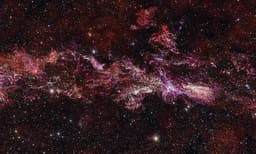
This significant molecule was identified in a molecular cloud near the center of our galaxy, approximately 27,000 light-years from Earth. Molecular clouds are known as stellar nurseries where stars and planetary systems form, implying that the ingredients for life are transferred to nascent planets.

trending

Ohio snow emergency declared

trending

TikTok down in United States

trending

Andreeva matches Venus Williams' feat

trending

Warrington Hospital baby death

trending

Alexander Zverev advances in Australia

trending

Oilers host Capitals

trending

London celebrates Chinese New Year

trending

Liza Minnelli defends AI use

Researchers synthesized the molecule in a lab, creating a unique radio fingerprint that matched observations from Spanish radio telescopes. This finding supports the theory that complex molecules, including those containing sulfur, may originate from interstellar space and could have been delivered to Earth via comets and meteorites.

Disclaimer: This story has been auto-aggregated and auto-summarised by a computer program. This story has not been edited or created by the Feedzop team.
The largest sulfur-bearing organic molecule ever identified in interstellar space contains 13 atoms and is named 2,5-cyclohexadiene-1-thione.
The discovery of large sulfur-bearing molecules in space is important because it fills a gap between simple interstellar chemistry and the complex building blocks of life, helping scientists understand the cosmic origins of life's chemistry.
The largest sulfur-bearing molecule was found in a molecular cloud located near the center of our galaxy, approximately 27,000 light-years from Earth.

Read more news on

Scienceside-arrowEarthside-arrow

You may also like

Webb Telescope Unveils Dark Matter Cosmic Web

26 Jan • 20 reads

article image

Dying Star's Final Moments Captured by Webb Telescope

24 Jan • 40 reads

article image

Webb Telescope Uncovers Black Hole's Dusty Secret

18 Jan • 74 reads

article image

Ring Nebula's Iron Bar: A Glimpse of Earth's Cosmic Demise?

16 Jan • 77 reads

article image

JWST's Red Dots: Violent Black Holes Revealed!

14 Jan • 81 reads

article image