Home / Science / Kilimanjaro's warming summit hides a cooling middle
Kilimanjaro's warming summit hides a cooling middle
5 Nov
Summary
- Kilimanjaro's summit is warming, while middle slopes are cooling.
- Vegetation expansion may explain opposing temperature trends.
- Research combined ground sensors with satellite data.
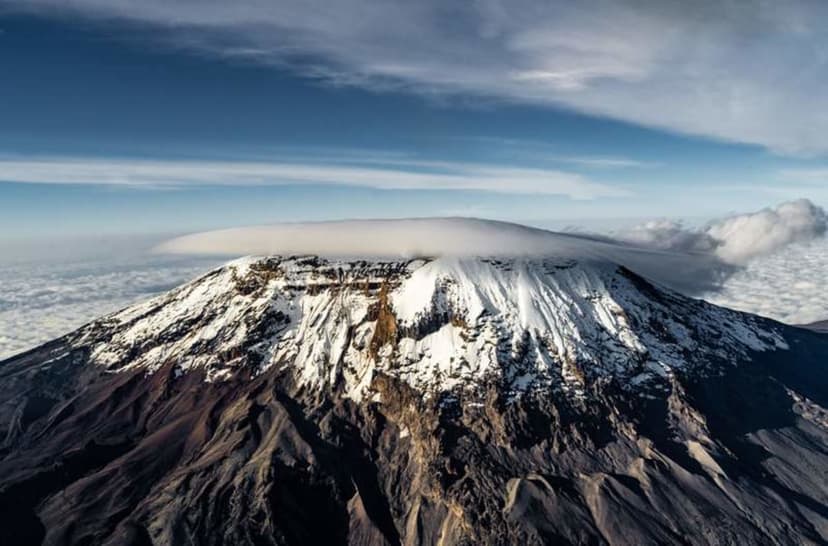
Africa's tallest mountain, Mount Kilimanjaro, is experiencing divergent temperature trends, with its summit warming while its middle slopes are cooling. This complex climate pattern is being studied as a unique 'climate experiment' due to the mountain's isolated nature. Researchers combined extensive ground sensor data with satellite readings, employing machine learning to model temperatures across the entire mountain.
The analysis revealed that daytime temperatures near the summit have risen by 0.05 to 0.10°C per decade between 2004 and 2019. Conversely, daytime temperatures on the middle slopes, specifically between 3,000 and 3,500 meters, have decreased by 0.13 to 0.14°C per decade. This cooling trend is linked to the expansion of heathland vegetation, which alters surface energy by increasing evapotranspiration and providing shade.
High-altitude surfaces on Kilimanjaro absorb intense solar radiation, leading to significant differences between land surface and air temperatures, especially at the ice field and desert zones. While the summit warms, the rainforest zone has shown minimal daytime warming, possibly due to conservation efforts. This research, published in npj Climate and Atmospheric Sciences, offers a vital model for understanding temperature changes on tropical mountains where data is often scarce.


