Home / Science / Jurassic Oceans: Fossils Reveal Climate Change Echoes
Jurassic Oceans: Fossils Reveal Climate Change Echoes
21 May
Summary
- Exhibition showcases fearsome prehistoric marine creatures.
- Ancient oceans faced similar warming and CO2 levels.
- Prehistoric climate shifts offer stark warnings for today.
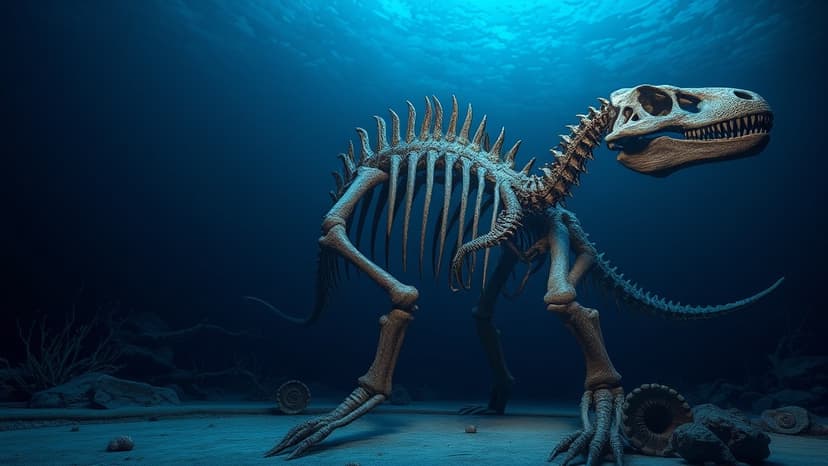
The Natural History Museum's 'Jurassic Oceans' exhibition delves into the world of prehistoric marine life, showcasing fossils and sculptures of creatures that ruled the seas over 66 million years ago. Visitors can explore the remains of formidable predators like plesiosaurs, ichthyosaurs, and mosasaurs, gaining insights into their hunting strategies and unique adaptations.
Curators draw striking parallels between the ancient oceans and contemporary marine ecosystems. They explain that the Jurassic era, despite a dimmer sun, was warmer due to higher CO2 levels, leading to higher sea levels and different ocean circulation patterns. Similar conditions benefited creatures like ammonites, whose modern relatives are thriving in warmer seas today.
The exhibition also highlights significant evolutionary changes in marine predators. Sharks, now dominant hunters, were once middle predators, preying on ammonites but also falling prey to larger marine reptiles. This dynamic ecosystem faced drastic changes, with some species like ichthyosaurs declining due to prey scarcity linked to climate shifts.
This historical perspective serves as a critical warning about modern climate change. The rapid increase in atmospheric CO2, exceeding 2,000 gigatons in less than 200 years, is causing ocean warming, acidification, and deoxygenation. These changes threaten phytoplankton, the base of the marine food chain, and impact ecosystems at an unprecedented speed that many species cannot adapt to.


