Home / Science / ISRO Launch Success Amidst Privatization Fears
ISRO Launch Success Amidst Privatization Fears
6 Oct
Summary
- ISRO successfully launched the EOS-05 satellite on September 4, 2026.
- Employees expressed concerns over ISRO's privatization and future role.
- ISRO clarified that privatization is not planned and its importance remains.
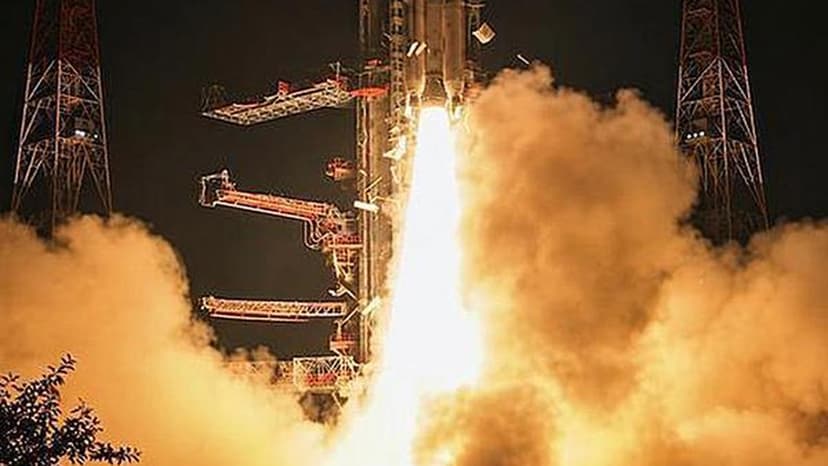
The Indian Space Research Organisation (ISRO) experienced a successful predawn launch of the advanced earth observation satellite EOS-05 on September 4, 2026, using the Geosynchronous Satellite Launch Vehicle rocket. This marked a crucial successful mission after an eight-month gap following two launch failures.
However, the celebration was tempered by internal dissent. A group of ISRO employees voiced concerns to the ISRO chairman about the government's policy on privatization, the transfer of manufacturing functions, and the future impact on employees. The Joint Action Council (JAC) specifically sought clarification on statements suggesting ISRO would cease manufacturing launch vehicles, which would be handled by the private sector.
In response to these growing concerns, ISRO issued a clarification, refuting claims of privatization and a diminished role. ISRO chairman V. Narayanan emphasized that the agency would remain the bedrock of the Indian space sector, with IN-SPACe facilitating non-governmental participation and NewSpace India Ltd. (NSIL) managing commercialization. Despite these assurances, the JAC escalated their concerns, demanding an official inquiry into alleged sabotage in previous launch failures.
Beyond domestic issues, ISRO also bolstered its international presence. Dr. Narayanan signed a five-year extension of the cooperation agreement with the European Space Agency until January 8, 2032, adding new areas like space weather and exploration. ISRO also conducted critical hot-tests for cryogenic and semi-cryogenic engines, including a demonstration for the Gaganyaan mission's C32 engine stage and a successful full-thrust test of a semi-cryogenic engine power head test article.
Meanwhile, the private sector saw significant developments. Space technology startup GalaxEye secured a U.S. patent for its OptoSAR imaging technology, becoming the first Indian startup to do so. Bengaluru-based Pixxel closed a $100 million Series C funding round, bringing its total funding to $195 million. IN-SPACe also released guidelines for implementing the Indian Space Policy 2023 regarding payloads.


