

Home / Science / Indonesia Skulls Returned From Dutch Museum
Indonesia Skulls Returned From Dutch Museum
7 Apr
Summary
- Moluccan skulls, taken during Dutch colonization, are back in Indonesia.
- Empty display stands mark the former location of the skulls in Amsterdam.
- Museums grapple with returning thousands of colonial-era human remains.
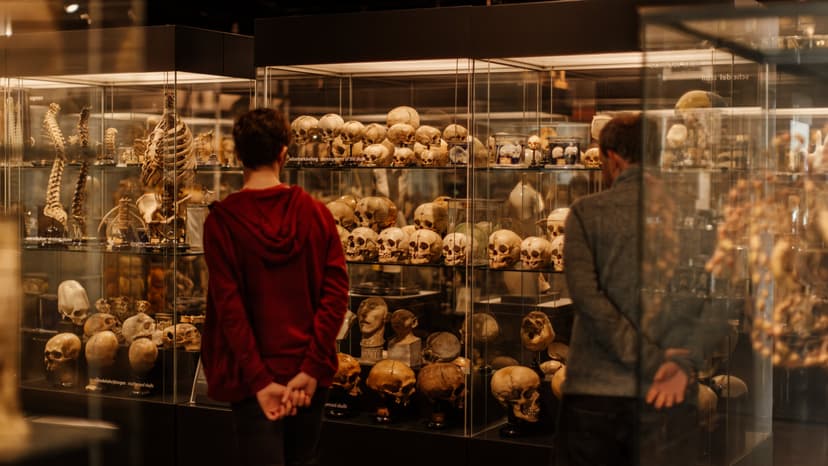
Human remains from Indonesia's Moluccan archipelago, collected during the Dutch colonial era for 'race science' studies, have been repatriated.
Menucha Latumaerissa discovered the 1917 book detailing studies on Moluccan skulls, prompting his search for their whereabouts. He located them in Amsterdam's Museum Vrolik, a collection of anatomical specimens.
The skulls are now back in the Moluccan archipelago. Their former presence in the museum is now symbolized by empty metal stands in display cases at the Museum Vrolik. An exhibition through June 27, 2027, titled "Imagine: The Future of Human Remains from Colonial Contexts," draws attention to these problematic collections.
Museum director Laurens de Rooy emphasized that collections like these should ideally be returned to their communities. This situation reflects a challenge faced by many European museums: how to address thousands of colonial-era human remains in their collections, which were often acquired through questionable means.
While the United States has laws like NAGPRA for returning Indigenous remains, Europe lacks similar legislation. Institutions are navigating this issue through local laws and ethical guidelines, with organizations like the International Council on Museums encouraging provenance research and repatriation.
Efforts toward repatriation are underway in various European institutions. The Karolinska Institute in Stockholm has returned 122 skulls since 2015, though documentation challenges persist. German museums face complexities with local laws and varying requests from receiving countries. The Museum of Prehistory in Berlin has repatriated skulls, but some African nations have not claimed them due to governmental blockages.
Other institutions, like the Charité hospital museum in Berlin, have had more success, participating in 10 repatriation events since 2011. This proactive stance, driven by a clear institutional decision to no longer study colonial past specimens, facilitates dialogue and return ceremonies.
The repatriation of the Moluccan remains was significantly aided by Latumaerissa's efforts, uncovering that the skulls were removed from Amtufu village in 1912. Latumaerissa expressed sadness over the destruction of Moluccan culture and the historical study of his people for 'race science' rather than appreciation of their heritage.
Latumaerissa is now pursuing the return of a baby's skeleton taken from the Aru Islands in 1929, aiming to bring peace to the remains.
