Home / Science / India Plans ₹10,000 Crore Weather Upgrade
India Plans ₹10,000 Crore Weather Upgrade
22 Sep
Summary
- India plans ₹10,000 crore to modernize weather forecasting.
- Investment aims to improve early warning systems for disasters.
- Accurate forecasts are crucial for India's farm-dependent economy.
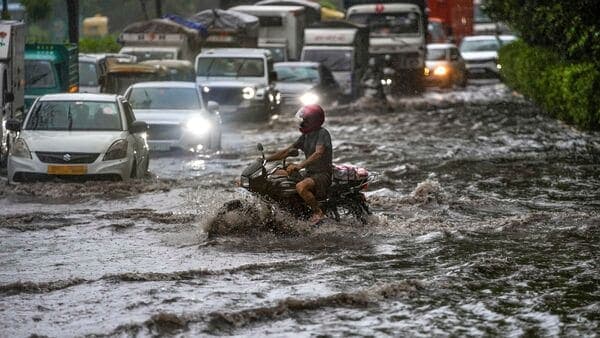
The Indian government is planning a ₹10,000-crore initiative to modernize the nation's weather forecasting system. This significant financial push, an expansion of the ongoing Mission Mausam scheme, will involve substantial annual outlays for advanced weather radars, satellites, and skilled personnel.
The investment is deemed critical as India faces increasing social and economic costs due to erratic weather and natural disasters. A vast portion of its workforce is engaged in agriculture, and many industries rely heavily on accurate weather predictions for their operations.
The proposal is currently under evaluation by the finance ministry, with a decision expected soon. The core objective is to establish a robust ecosystem for enhanced prediction models and a reliable early-warning system. This will better equip authorities and citizens to anticipate and mitigate the impact of extreme weather events.
Experts highlight that denser observations, superior computing power, and higher-resolution models are key to improving forecasting accuracy. The proposed modernization directly addresses these needs by increasing the number of radars and weather stations and enhancing computing capabilities.
India's vulnerability to climate change is evident in the rising frequency of natural calamities. Studies indicate that even a 24-hour warning of impending storms or heatwaves can cut potential damage by 30%. An estimated $800 million invested in early warning systems in developing nations could prevent annual disaster losses of $3-16 billion.
Mission Mausam, launched with an initial outlay of ₹2,000 crore for 2024-26, aims to make India "weather-ready and climate-smart." It focuses on improving observation, modeling, and forecasting networks, with emphasis on monsoon research, climate change, and severe weather. The mission seeks to extend lead times, enhance forecast accuracy, and build impact-based early-warning systems across various sectors.
Recent events, including heatwaves, heavy rainfall, floods, and landslides across the country, underscore the urgent need for advanced forecasting. The economic toll of these disruptions is significant, with India losing an estimated 0.4% of its GDP annually due to natural disasters.


