Home / Science / IIT Roorkee's Eco-Solution for Hydroponics Wastewater
IIT Roorkee's Eco-Solution for Hydroponics Wastewater
13 Feb
Summary
- New technology uses microalgal photogranules to treat wastewater.
- Granules naturally settle, simplifying separation and lowering costs.
- System achieves high removal rates for pollutants within days.
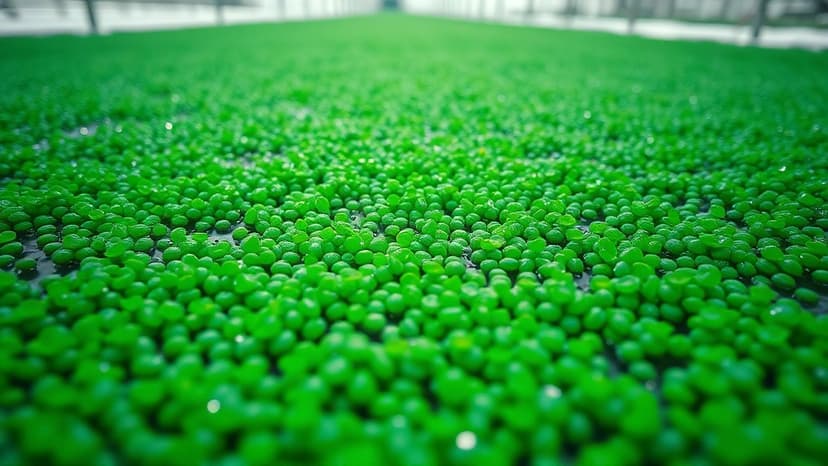
Hydrologists at IIT Roorkee have pioneered an indigenous, low-cost technology to manage wastewater from hydroponic farming. This new method utilizes microalgal photogranules, a symbiotic community of microalgae, bacteria, and cyanobacteria, to treat nutrient-rich water. The challenge of harvesting microscopic algae has been overcome by inducing them to form dense, spherical granules that readily settle.
The developed technology employs a light-driven photogranule reactor. Hydroponic wastewater is introduced with light and gentle mixing, allowing microalgae to absorb nutrients and associated bacteria to degrade organic pollutants. This process leads to the formation of compact granules.
These photogranules offer significant environmental benefits, achieving nearly complete removal of biological and chemical oxygen demand, approximately 99% reduction in phosphate and ammonia, and about 90% nitrate removal. The system also captures carbon dioxide, contributing to climate change mitigation. Its low energy needs, chemical-free operation, and simple biomass recovery make it a scalable and sustainable solution for the growing hydroponics sector.