feedzop-word-mark-logo
searchLogin
Feedzop
homeFor YouUnited StatesUnited States
You
bookmarksYour BookmarkshashtagYour Topics
Trending
Terms of UsePrivacy PolicyAboutJobsPartner With Us

© 2026 Advergame Technologies Pvt. Ltd. ("ATPL"). Gamezop ® & Quizzop ® are registered trademarks of ATPL.

Gamezop is a plug-and-play gaming platform that any app or website can integrate to bring casual gaming for its users. Gamezop also operates Quizzop, a quizzing platform, that digital products can add as a trivia section.

Over 5,000 products from more than 70 countries have integrated Gamezop and Quizzop. These include Amazon, Samsung Internet, Snap, Tata Play, AccuWeather, Paytm, Gulf News, and Branch.

Games and trivia increase user engagement significantly within all kinds of apps and websites, besides opening a new stream of advertising revenue. Gamezop and Quizzop take 30 minutes to integrate and can be used for free: both by the products integrating them and end users

Increase ad revenue and engagement on your app / website with games, quizzes, astrology, and cricket content. Visit: business.gamezop.com

Property Code: 5571

trending

JPMorgan Chase earnings beat

trending

Patriots defeat Chargers 16-3

trending

Leafs beat Avalanche in OT

trending

Anthropic launches Claude for Healthcare

trending

Clippers beat Hornets

trending

Red Wings honor Fedorov

trending

Kings beat Los Angeles Lakers

trending

Zoe Saldana box office record

trending

Emma Raducanu Hobart debut

Home / Science / DNA Scissors Inventor Hamilton Smith Dies at 94

DNA Scissors Inventor Hamilton Smith Dies at 94

6 Dec, 2025

•

Summary

  • Hamilton O. Smith, Nobel laureate, discovered DNA-cutting enzymes.
  • His findings enabled genetically engineered medicines like insulin.
  • His work revolutionized molecular biology and forensics.
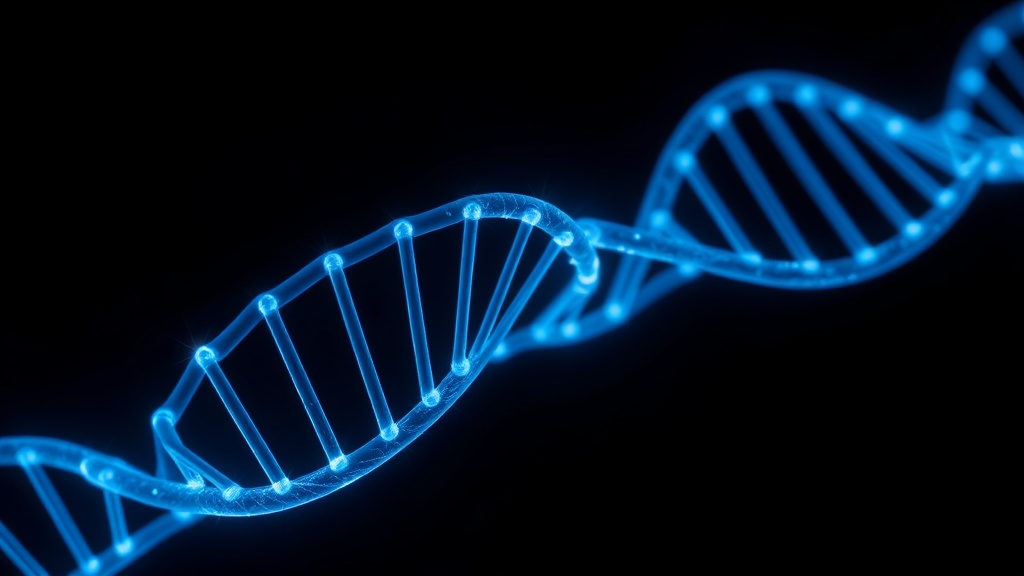
DNA Scissors Inventor Hamilton Smith Dies at 94

Hamilton O. Smith, a Nobel Prize-winning scientist credited with discovering enzymes that cut DNA, has died at the age of 94. His seminal work in the late 1960s identified restriction enzymes, a discovery that provided scientists with the ability to precisely manipulate genetic material. This breakthrough fundamentally transformed molecular biology and opened doors to numerous scientific and medical innovations.

The discovery of restriction enzymes, specifically HINDII identified by Dr. Smith, is considered a major milestone akin to the double helix discovery and CRISPR technology. These enzymes act as "chemical knives," enabling the isolation, analysis, and movement of specific DNA sequences. This capability has since become indispensable in fields ranging from cloning and genomics to crime scene investigations.

Dr. Smith's research directly contributed to life-saving medical advancements, most notably the development of synthetic human insulin in 1978. His Nobel Prize in Physiology or Medicine was shared with colleagues Daniel Nathans and Werner Arber for their related work. Even after receiving the Nobel, Smith continued to make significant contributions, including his involvement in the human genome sequencing race and the creation of an artificial bacterial cell.

Disclaimer: This story has been auto-aggregated and auto-summarised by a computer program. This story has not been edited or created by the Feedzop team.
Hamilton O. Smith was a Nobel laureate who discovered restriction enzymes, which precisely cut DNA.
His discovery of restriction enzymes was crucial for developing genetically engineered medicines, such as synthetic human insulin.
Beyond medicine, Smith's research advanced fields like cloning, genomics, and crime lab forensics.

Read more news on

Scienceside-arrow

You may also like

AI Speeds Drug Discovery, Secures $25M

5 hours ago • 2 reads

article image

Miracle Baby Walks After Gene Editing Therapy

22 Dec, 2025 • 117 reads

article image

Ancient Gene Resurrected: A Key to Future Health?

17 Dec, 2025 • 113 reads

article image

New Blood Test Boosts Early Liver Cancer Detection

16 Dec, 2025 • 112 reads

article image

Gene Therapy Offers Hope for Sickle Cell Kids

6 Dec, 2025 • 223 reads

article image