feedzop-word-mark-logo
searchLogin
Feedzop
homeFor YouUnited StatesUnited States
You
bookmarksYour BookmarkshashtagYour Topics
Trending
Terms of UsePrivacy PolicyAboutJobsPartner With Us

© 2026 Advergame Technologies Pvt. Ltd. ("ATPL"). Gamezop ® & Quizzop ® are registered trademarks of ATPL.

Gamezop is a plug-and-play gaming platform that any app or website can integrate to bring casual gaming for its users. Gamezop also operates Quizzop, a quizzing platform, that digital products can add as a trivia section.

Over 5,000 products from more than 70 countries have integrated Gamezop and Quizzop. These include Amazon, Samsung Internet, Snap, Tata Play, AccuWeather, Paytm, Gulf News, and Branch.

Games and trivia increase user engagement significantly within all kinds of apps and websites, besides opening a new stream of advertising revenue. Gamezop and Quizzop take 30 minutes to integrate and can be used for free: both by the products integrating them and end users

Increase ad revenue and engagement on your app / website with games, quizzes, astrology, and cricket content. Visit: business.gamezop.com

Property Code: 5571

Home / Science / Guilt vs. Shame: Brain Maps Reveal Different Triggers

Guilt vs. Shame: Brain Maps Reveal Different Triggers

19 Dec, 2025

•

Summary

  • Harm's impact on guilt is stronger, while responsibility fuels shame.
  • Distinct brain regions process guilt and shame-driven actions.
  • Guilt, more than shame, influences compensatory behavior decisions.
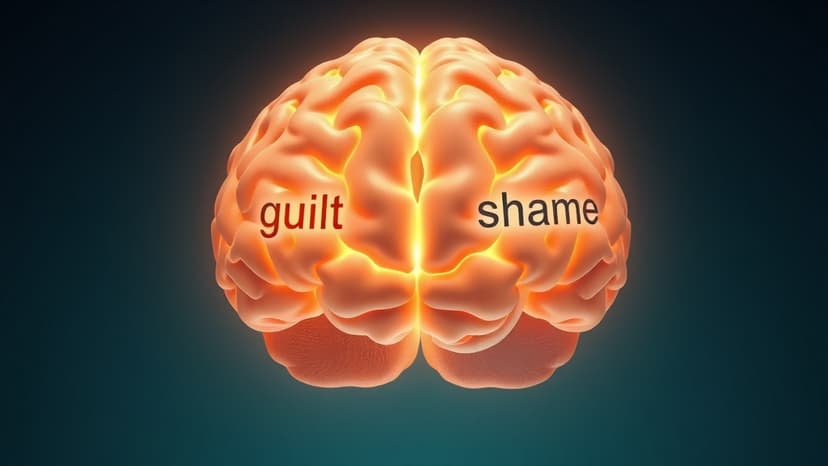
Guilt vs. Shame: Brain Maps Reveal Different Triggers

New research clarifies the differing psychological and neurological underpinnings of guilt and shame. The study indicates that the extent of harm inflicted upon another individual more heavily influences feelings of guilt. Conversely, an individual's perceived responsibility for causing that harm appears to be a stronger antecedent to feelings of shame. These distinct emotional responses are processed by different regions in the brain.

Behaviorally, the findings suggest that guilt has a more pronounced effect on driving compensatory actions compared to shame. This suggests that when people feel guilty, they are more motivated to make amends. The study employed a 'dots estimation game' utilizing functional magnetic resonance imaging (fMRI) to observe brain activity during decision-making related to compensation.

trending

India U19 World Cup final

trending

India, Afghanistan U19 semifinal

trending

India vs South Africa warm-up

trending

Anthropic AI triggers IT selloff

trending

Pakistan vs Ireland warm-up

trending

T20 World Cup 2026 details

trending

Afghanistan vs West Indies match

trending

McMullen unsold for IPL 2026

trending

Axar Patel cricket career

Analysis of fMRI scans revealed that guilt and shame-driven compensatory decisions recruit separate neural activities. Shame-driven choices, in particular, showed a stronger correlation with activity in the lateral prefrontal cortex, a brain area associated with cognitive control. The research contributes to understanding how harm and responsibility are processed and integrated, particularly in group settings.

Disclaimer: This story has been auto-aggregated and auto-summarised by a computer program. This story has not been edited or created by the Feedzop team.
The study found that harm more strongly evokes guilt, while responsibility for harm drives shame.
Guilt has a greater effect on driving compensatory behavior compared to shame, according to the research.
Distinct brain regions, including the posterior insula and striatum, process inequity and value, while the lateral prefrontal cortex is linked to shame-driven decisions.

Read more news on

Scienceside-arrow

You may also like

Babies' Brains Know More Than We Thought!

2 Feb • 7 reads

article image

Teen Brain Builds New Synapses, Not Just Pruning

19 Jan • 64 reads

article image

Exercise Fights Depression as Effectively as Therapy

17 Jan • 85 reads

article image

Genes Link Minds: Shared Roots for Mental Health

4 Jan • 205 reads

article image

Imagine It: Boost Liking & Brain Rewiring

11 Dec, 2025 • 202 reads