feedzop-word-mark-logo
searchLogin
Feedzop
homeFor YouUnited StatesUnited States
You
bookmarksYour BookmarkshashtagYour Topics
Trending
Terms of UsePrivacy PolicyAboutJobsPartner With Us

© 2026 Advergame Technologies Pvt. Ltd. ("ATPL"). Gamezop ® & Quizzop ® are registered trademarks of ATPL.

Gamezop is a plug-and-play gaming platform that any app or website can integrate to bring casual gaming for its users. Gamezop also operates Quizzop, a quizzing platform, that digital products can add as a trivia section.

Over 5,000 products from more than 70 countries have integrated Gamezop and Quizzop. These include Amazon, Samsung Internet, Snap, Tata Play, AccuWeather, Paytm, Gulf News, and Branch.

Games and trivia increase user engagement significantly within all kinds of apps and websites, besides opening a new stream of advertising revenue. Gamezop and Quizzop take 30 minutes to integrate and can be used for free: both by the products integrating them and end users

Increase ad revenue and engagement on your app / website with games, quizzes, astrology, and cricket content. Visit: business.gamezop.com

Property Code: 5571

Home / Science / Scientists Study Growing Glaciers to Save Melting Ice

Scientists Study Growing Glaciers to Save Melting Ice

14 Jan

•

Summary

  • Tajikistan glaciers resist melting, offering hope for global ice preservation.
  • Ice cores from 5,810 meters aim to unlock secrets of anomalous glacier growth.
  • Research seeks to apply findings to protect threatened glaciers worldwide.
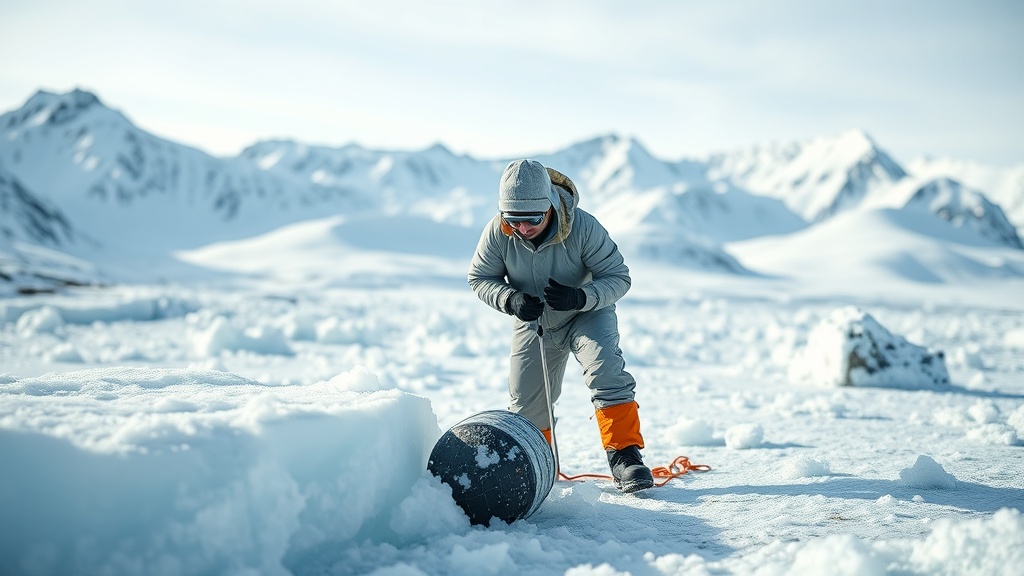
Scientists Study Growing Glaciers to Save Melting Ice

Japanese scientist Yoshinori Iizuka is part of an international team studying glaciers in Tajikistan's Pamir Mountains, where an unusual phenomenon of ice growth is occurring. These glaciers have resisted the widespread melting observed globally, a situation scientists are calling the 'Pamir-Karakoram anomaly.' The research aims to understand the mechanisms behind this resilience.

Ice cores, drilled to approximately 105 meters from the Kon-Chukurbashi ice cap at 5,810 meters altitude, are being analyzed. One set of samples is stored in Antarctica, while another is at Hokkaido University in Japan. Scientists are meticulously examining these cores for clues about past precipitation and temperature, hoping to reconstruct climatic history stretching back thousands of years.

The analysis of these ancient ice samples could provide crucial insights into how to protect glaciers threatened by global warming. By understanding why these specific glaciers have grown, researchers hope to develop strategies applicable to preserving glacial ice worldwide, offering a potential pathway to mitigating the impacts of climate change on these vital natural resources.

trending

Michigan 100-vehicle pileup closes I-196

trending

Snow squalls hit Ontario

trending

Bucks beat Hawks, end skid

trending

Russia's Kamchatka snow disaster

trending

Aurora borealis visible tonight

trending

Indiana faces Miami for CFP

trending

NFL head coach firings

trending

Thunder crush Cavaliers 136-104

Disclaimer: This story has been auto-aggregated and auto-summarised by a computer program. This story has not been edited or created by the Feedzop team.
The anomaly refers to glaciers in the Pamir-Karakoram region that have resisted melting and, in some cases, slightly grown, contrary to global trends.
Analyzing ice cores reveals past climate conditions, offering insights to understand glacier behavior and potentially develop strategies to preserve threatened glaciers worldwide.
Samples are stored in a sanctuary in Antarctica by the Ice Memory Foundation and at Hokkaido University in Japan for scientific analysis.

Read more news on

Scienceside-arrow

You may also like

Leopard Roams Pune Airport, Evades Capture

15 Jan • 24 reads

article image

Tajikistan Ice Cap Thrives Amidst Warming

7 Jan • 84 reads

article image

Japan's Aging Infrastructure Crumbles Under Disasters

1 Jan • 108 reads

article image

Japan Jolted: 6.0 Quake Strikes Off Noda Coast

1 Jan • 122 reads

article image

Glacier Floods Surge: Climate Change Unleashes Deadly GLOFs

22 Dec, 2025 • 103 reads

article image