Home / Science / Sterilized Males: Google's Plan to Erase Mosquitoes
Sterilized Males: Google's Plan to Erase Mosquitoes
21 Jul
Summary
- Google's Debug project plans to release millions of sterile male mosquitoes.
- The goal is to mate with females, preventing eggs from hatching and reducing populations.
- Australian trials showed this method can suppress invasive mosquito populations significantly.
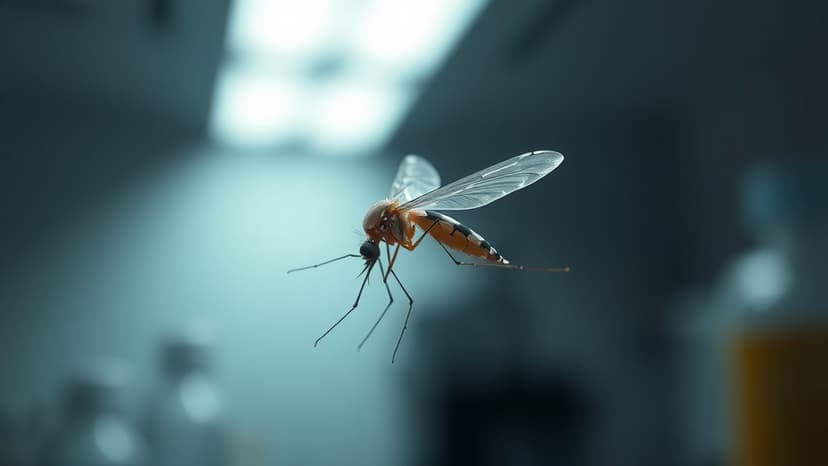
Google's 'Debug' project, operating under Alphabet, has requested federal permission to release up to 32 million sterilized male mosquitoes annually for two years in California and Florida. Male mosquitoes do not bite or transmit diseases; the strategy hinges on them mating with disease-carrying females, resulting in unviable eggs.
This initiative builds on a decade-old project in far north Queensland, Australia, led by the author, with Google's life sciences division (Verily). That trial successfully suppressed populations of Aedes aegypti, a mosquito species responsible for spreading dengue, Zika, chikungunya, and yellow fever.
The Australian experiment, named 'Debug Innisfail', utilized a naturally occurring bacterium called wolbachia. Certain strains of wolbachia induce reproductive incompatibility in mosquitoes. Releasing enough males carrying this bacterium into a population can lead to a significant decline in mosquito numbers over time.
Field surveys and community engagement preceded the Queensland trial, which began in 2015. In 2018, approximately three million wolbachia-carrying male mosquitoes were released over 20 weeks into three towns. Within four weeks, mosquito populations in these towns showed a decline compared to control towns.
The suppression effects persisted into the following year in some areas, with one town experiencing roughly 95% reduction in Aedes aegypti. This success provides evidence for the US plan, indicating minimal ecological impact due to Aedes aegypti's domesticated nature and its preference for human environments.
The Australian trials also suggest the approach can work at scale, with continuous releases potentially reducing populations across entire towns. Furthermore, suppression benefits may extend beyond the release periods. Success, however, depends on local ecology, mosquito movement, and robust community participation, not solely on the technology itself.


