Home / Science / Panama Lab Prepares 'Super-Fly' Against Screwworm Threat
Panama Lab Prepares 'Super-Fly' Against Screwworm Threat
23 Jul
Summary
- Genetically modified flies, NovoFly, will be tested outdoors in Panama.
- These flies produce only male offspring, boosting sterile fly production.
- The screwworm parasite threatens over $1 billion in Texas livestock losses.
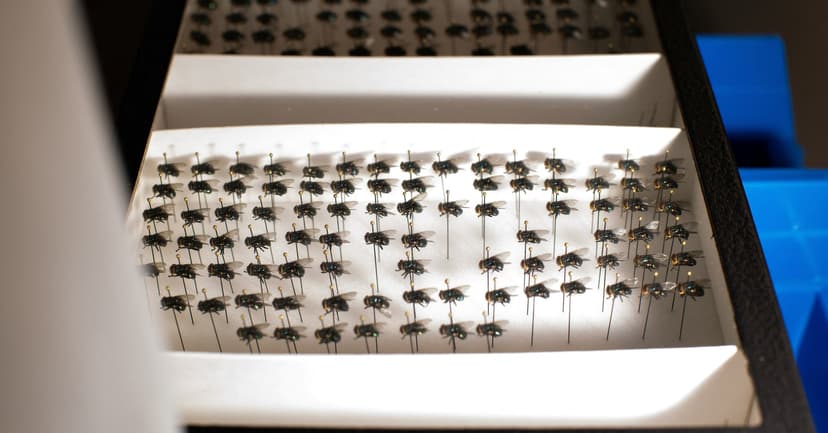
In Panama, scientists are set to conduct the first outdoor tests of genetically modified screwworm flies, a development aimed at creating a powerful new weapon against a devastating parasite. These modified flies, known as NovoFly, are engineered to produce only male offspring. This genetic trait could significantly increase the production of sterile flies used in eradication efforts.
The New World screwworm has recently infested livestock in Texas, posing a threat of over $1 billion in losses to the state's agricultural industry. Traditional methods rely on releasing millions of sterile male flies weekly, but current capacity is insufficient to control the widespread infestations. NovoFly technology aims to overcome this limitation by making the sterile fly production process more efficient.
Initial outdoor testing in Panama will assess NovoFly's survival and effectiveness under real-world conditions. Subsequent larger field trials are planned nearby, involving the release of tens of thousands of marked flies to track their performance. If successful, NovoFly could be a crucial tool in eradicating the screwworm, with potential production sites in Texas and Mexico.
The U.S. Environmental Protection Agency is reviewing NovoFly for registration, which would make it the first genetically modified insect to receive full clearance. While promising, researchers emphasize that success is not guaranteed and large-scale production would take time. Eradicating the pest could still take over a year, even with the new technology.


