Home / Science / Otter Homes Shrink: Only 0.26% of Ganga Basin Suitable
Otter Homes Shrink: Only 0.26% of Ganga Basin Suitable
31 Aug
Summary
- Only 0.26% of Ganga River Basin offers highly suitable habitat for smooth-coated otters.
- Habitat loss due to land use changes is a primary threat to vulnerable otters.
- Proximity to protected areas is the most critical factor for otter survival.
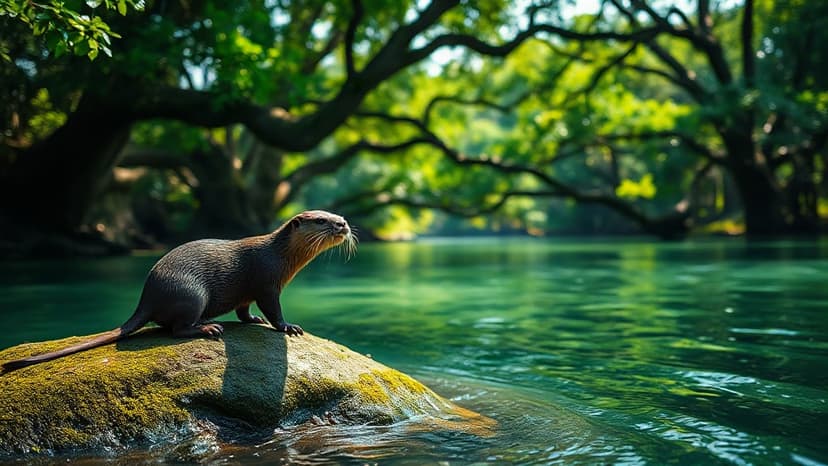
A recent comprehensive study published in PLOS One has determined that only 2,138 sq km, or 0.26%, of the vast Ganga River Basin provides highly suitable habitat for the smooth-coated otter. Researchers from the Wildlife Institute of India (WII) identified that significant portions of the basin are least suitable, with only moderate suitability in smaller areas.
Historically, the Ganga basin was a stronghold for these otters. However, extensive habitat loss driven by changing land uses for human population growth has severely impacted their numbers. The species is now classified as 'vulnerable' by the IUCN due to habitat degradation, declining prey, pollution, and poaching.
The eight-year study, spanning 11 states and 22 rivers, found Uttarakhand has the largest share of suitable habitat. Protected areas are vital, with proximity to them being the single most influential factor for habitat suitability. Stable weather, river access, and reliable water sources also play key roles.
The Terai region, particularly its left-bank tributaries of the Ganga, shows high habitat suitability, especially near protected areas like Rajaji National Park and Dudhwa Tiger Reserve. These areas offer reduced human disturbance and intact riparian vegetation.
Despite the identification of critical hotspots, approximately 21% of suitable otter habitat lies outside formal protected areas. This fragmentation raises concerns, necessitating urgent conservation measures including regulating sand mining and encroachments along riverbanks to maintain river connectivity and protect otter populations.


