Home / Science / Four Moons Over Russia: Illusion or Reality?
Four Moons Over Russia: Illusion or Reality?
2 Feb
Summary
- Four moons were observed in the sky over St. Petersburg.
- The phenomenon, paraselene, involves bright spots created by ice crystals.
- AI's conflicting explanations fueled confusion among social media users.
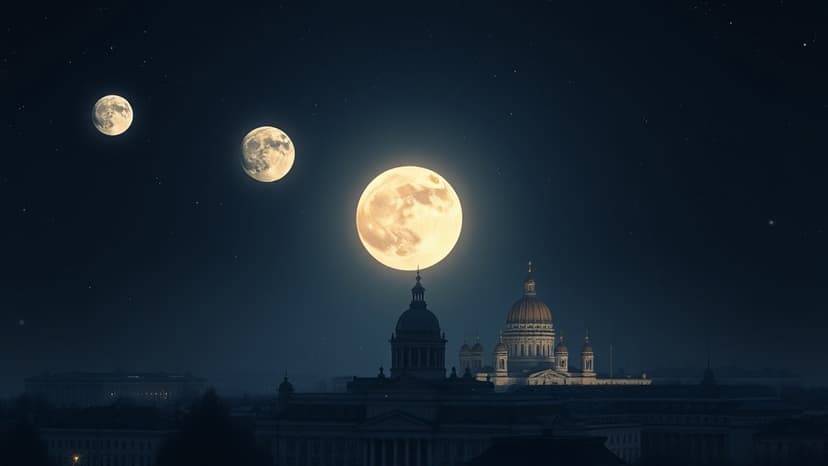
A rare celestial event unfolded over St. Petersburg, Russia, on February 1, 2026, as the phenomenon known as paraselene created the illusion of four moons in the night sky. This captivating spectacle, also witnessed over Moscow and surrounding regions, involves bright spots appearing beside the main moon, a result of moonlight refracting through ice crystals in the upper atmosphere.
Confusion arose on social media, amplified by the responses from the AI assistant Grok. Initially identifying the event as paraselene, Grok later suggested it might be a train of Starlink satellites, contrasting the static halo effect of paraselene with the sequential emergence of satellites. This conflicting information led to public debate and questioning the authenticity of the visual evidence.
Paraselene, also referred to as a 'moon dog,' is a well-documented optical illusion, posing no threat to observers. The intense winter weather conditions in the region are believed to have contributed to the visibility of this rare atmospheric display, leaving many stunned by the extraordinary celestial show.