Home / Science / Brain's Memory Gate: How Flies Remember Smells
Brain's Memory Gate: How Flies Remember Smells
25 Oct
Summary
- A brain circuit in fruit flies has two halves, one usually restrained.
- This circuit helps flies remember a direction to follow a smell.
- The research was conducted by Katherine Nagel's lab at NYU Langone Health.
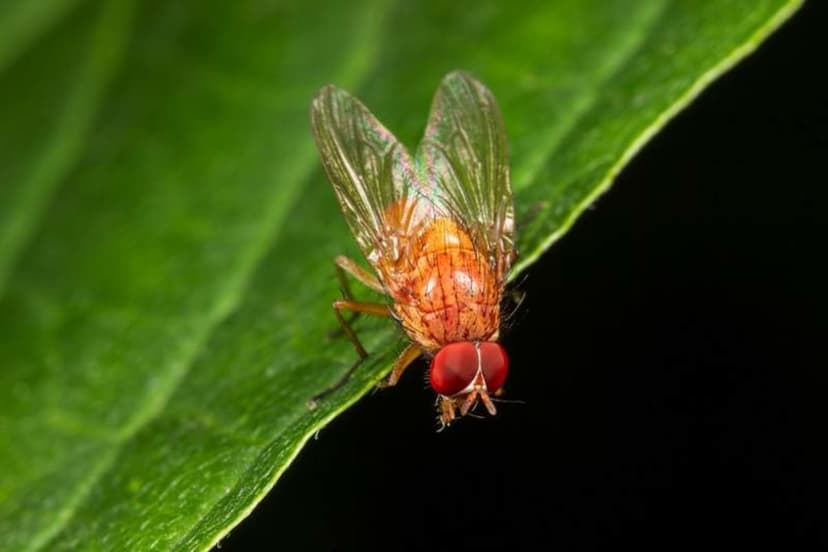
New research has illuminated how the brain forms short-term memories, using fruit flies as a model. Scientists found a circuit in the fly's navigation center that functions in two halves. One half of this circuit is typically restrained, acting as a gate that controls when a memory is established. When this restraint is lifted, the circuit locks in the direction the fly is facing, enabling it to remember and pursue a scent.
The study, conducted by Katherine Nagel's lab at NYU Langone Health, recorded brain activity in female flies. They observed that a specific circuit in the fan-shaped body, a region crucial for navigation, lights up when a fly detects an odor like apple cider vinegar. This neural activity, visualized as a 'bump' in the circuit, represents the remembered direction.
Interestingly, the researchers discovered that slow excitation within this circuit contributes to memory persistence, while fast inhibition controls its initiation. This "split attractor network" involves one part of the circuit remembering the direction and another controlling the timing of that memory. This groundbreaking work offers insights into fundamental processes like working memory.


