Home / Science / Giant Planet Survives Star's Death
Giant Planet Survives Star's Death
3 Jul
Summary
- A Jupiter-sized planet orbits a dead star 80 light-years away.
- The planet survived its star's violent death, defying prior theories.
- New observations suggest planets can have lively futures after stellar demise.
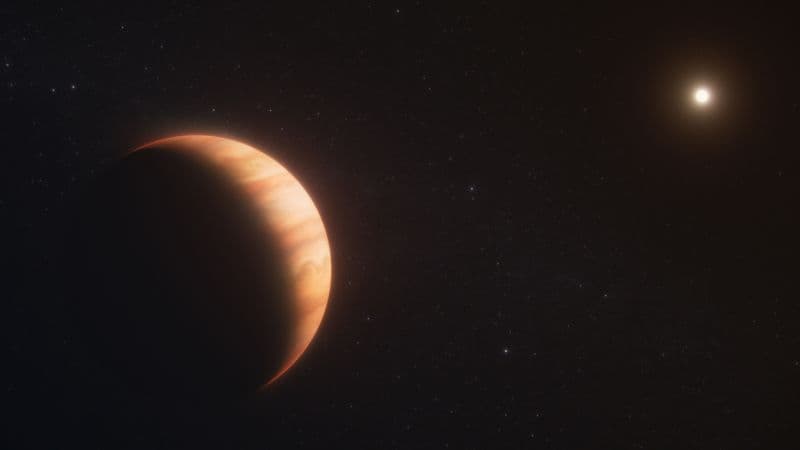
Astronomers have identified a massive, Jupiter-sized exoplanet, WD 1856 b, in a surprisingly close orbit around a dead white dwarf star located 80 light-years from Earth. This discovery is particularly astounding because the planet appears to have survived the violent process of its host star's death.
New observations made with the James Webb Space Telescope have provided critical data on the planet's atmosphere, mass, and temperature. These findings challenge prior assumptions, indicating that giant planets can indeed endure stellar demise and maintain active existences afterward. Initial analysis suggests the planet's atmosphere contains methane.
Scientists are exploring two primary theories for WD 1856 b's survival and current orbit: either it was engulfed and survived its star's expansion, or it avoided destruction and was later pushed closer by gravitational interactions. The data points towards a heating event approximately 1 billion years ago, potentially ruling out the engulfment theory.
This system serves as a potential preview for our own solar system. In about 5 billion years, our sun will expand into a red giant, with the fates of inner planets like Earth uncertain. However, outer gas giants like Jupiter and Saturn may endure, continuing to orbit the sun's white dwarf remnant.


