Home / Science / Exoplanet System Rewrites Planet Formation
Exoplanet System Rewrites Planet Formation
13 Feb
Summary
- A system with four planets defies common planet formation theories.
- An outermost rocky planet orbits beyond gaseous giants.
- This discovery suggests planets may form in varied environments.
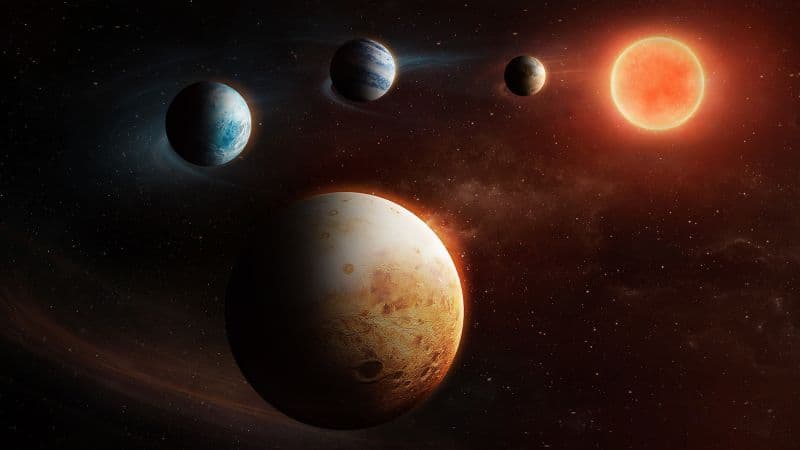
A recently discovered exoplanetary system, LHS 1903, located approximately 116 light-years from Earth, is prompting a reevaluation of how planets form. This system, orbiting a red dwarf star, comprises four planets with a peculiar configuration: a rocky inner planet, followed by two gaseous planets, and unexpectedly, a rocky planet in the outermost orbit. This arrangement challenges the conventional model where rocky planets are found closer to their star, and gas giants reside farther away, a pattern observed in our own solar system. Scientists theorize that this outer rocky planet, LHS 1903 e, may have formed later than the others in a "gas-depleted" environment, as typical planet formation models could not account for its existence. The discovery was made using data from NASA's TESS and ESA's Cheops satellites, along with other global telescopes, highlighting a significant international collaboration. The implications of this "inside out" planetary system could shed light on planet formation around red dwarf stars, the most common type of star in the galaxy, though the interpretation remains a subject of ongoing scientific debate and may require further observation with advanced telescopes like the James Webb Space Telescope.