feedzop-word-mark-logo
searchLogin
Feedzop
homeFor YouUnited StatesUnited States
You
bookmarksYour BookmarkshashtagYour Topics
Trending
Terms of UsePrivacy PolicyAboutJobsPartner With Us

© 2026 Advergame Technologies Pvt. Ltd. ("ATPL"). Gamezop ® & Quizzop ® are registered trademarks of ATPL.

Gamezop is a plug-and-play gaming platform that any app or website can integrate to bring casual gaming for its users. Gamezop also operates Quizzop, a quizzing platform, that digital products can add as a trivia section.

Over 5,000 products from more than 70 countries have integrated Gamezop and Quizzop. These include Amazon, Samsung Internet, Snap, Tata Play, AccuWeather, Paytm, Gulf News, and Branch.

Games and trivia increase user engagement significantly within all kinds of apps and websites, besides opening a new stream of advertising revenue. Gamezop and Quizzop take 30 minutes to integrate and can be used for free: both by the products integrating them and end users

Increase ad revenue and engagement on your app / website with games, quizzes, astrology, and cricket content. Visit: business.gamezop.com

Property Code: 5571

Home / Science / Europa's Ocean: Radioactive Rocks Could Fuel Alien Life

Europa's Ocean: Radioactive Rocks Could Fuel Alien Life

30 Dec, 2025

•

Summary

  • Radioactive elements seeping from rocks may power alien life in Europa's ocean.
  • New research models uranium and potassium decay generating energy ions.
  • Europa Clipper mission may test this new habitability theory in 2030.
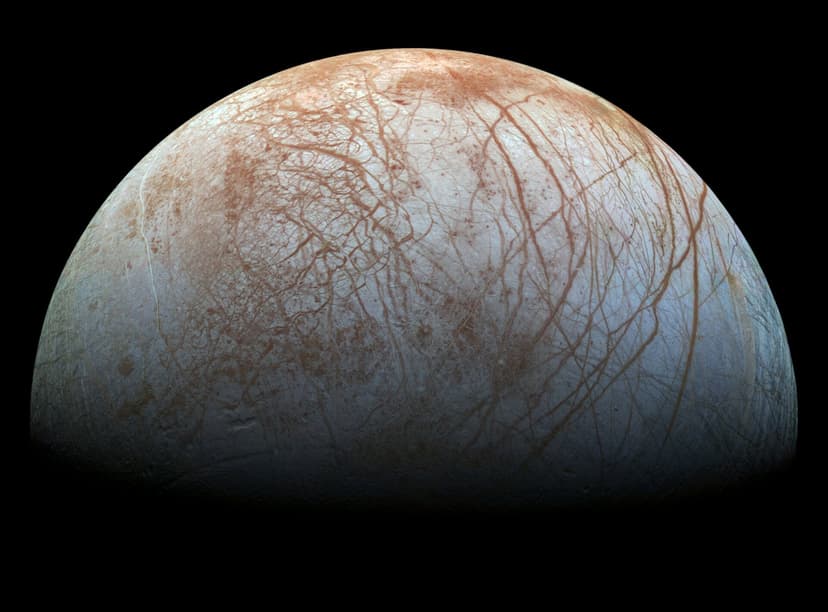
Europa's Ocean: Radioactive Rocks Could Fuel Alien Life

New research suggests that radioactive elements seeping from Europa's rocks may be the key energy source for potential life in the moon's vast ocean. Scientists have developed a model indicating that the natural decay of isotopes like Uranium-235, uranium-238, and potassium could generate sufficient energy ions. This process, akin to chemosynthesis on Earth, could theoretically sustain an estimated 1 septillion cells. This new theory arises as previous assumptions about internal heat powering life are challenged by evidence of a thicker icy crust on Europa. NASA's Europa Clipper mission, scheduled to reach Jupiter's system in 2030, may provide crucial data to test this groundbreaking hypothesis about Europa's habitability.


Disclaimer: This story has been auto-aggregated and auto-summarised by a computer program. This story has not been edited or created by the Feedzop team.

You may also like

Life's Recipe: Forget Water, Seek Phosphorus!

12 hours ago • 2 reads

article image

India Finds Massive Rare Earth Deposits

2 Feb • 53 reads

article image
trending

Ukraine power outages February 10

trending

Julia Taubitz leads Olympic luge

trending

Curry out against Grizzlies

trending

MBZUAI celebrates fifth anniversary

trending

Jutta Leerdam wins Olympic gold

trending

Netherlands vs Namibia T20

trending

Kim Kardashian, Lewis Hamilton couple?

trending

Lakers vs Thunder injury report

trending

South Africa beats Canada

Yes, scientists propose that radioactive elements seeping from Europa's rocks could provide enough energy through decay to support microbial life in its subsurface ocean.
The Europa Clipper mission, arriving in 2030, may gather data to test the new theory that radioactive decay fuels potential life on Europa.
Chemosynthesis is life relying on chemical reactions for energy, similar to organisms in Earth's deep-sea vents. Scientists theorize this process could occur on Europa using energy from radioactive decay.

Read more news on

Scienceside-arrowNASAside-arrow

Critical Minerals: The New Geopolitical Battleground

29 Jan • 84 reads

article image

Greenland Gold Rush: Dalaroo Eyes Rare Earths Bonanza

23 Jan • 100 reads

article image

India Taps Private Firms for Thorium, Monazite

14 Jan • 152 reads

article image