Home / Science / Antarctic Ice Meltdown Puts Penguins at Risk
Antarctic Ice Meltdown Puts Penguins at Risk
25 Feb
Summary
- Emperor penguins rely on stable sea ice for their annual feather regrowth.
- A drastic 2022-2024 Antarctic sea ice decline deprived penguins of safe molting.
- Thousands of penguins may have perished due to freezing waters, scientists fear.
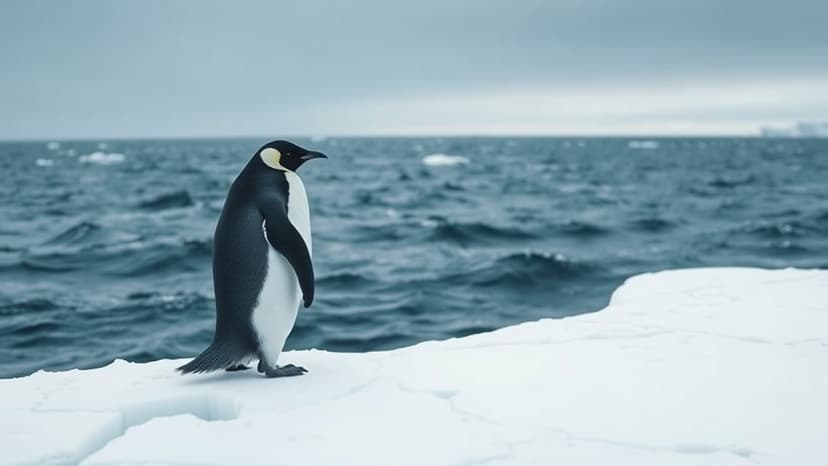
Emperor penguins face a critical threat as annual molting grounds vanish due to Antarctica's warming climate. These birds depend on stable floating ice platforms to replace their feathers, a process vital for survival. The critical 2022-2024 period saw a severe reduction in Antarctic sea ice, largely attributed to climate change, leaving penguins vulnerable.
Scientists now report that most of the Emperor penguins tracked in West Antarctica, a region housing 30-40% of the global population, have disappeared from satellite imagery. This disappearance leads researchers to believe thousands may have succumbed to freezing waters, unable to complete their essential feather replacement without adequate sea ice.
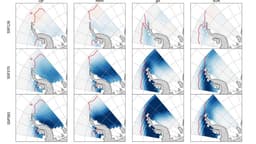
The annual 'catastrophic moult' requires penguins to remain on ice for 30-40 days, during which they lose waterproofing and up to 50% of their body mass. The 2022-2023 period saw sea ice fall from an average of 2.8 million sq km to a record low of 1.79 million sq km, a stark change impacting the penguins' survival.
While some penguins may have migrated to East Antarctica, disrupting breeding, scientists observe a few colonies adapting by molting on ice shelves. This adaptation, however, may negatively impact their breeding and feeding patterns. The findings serve as a stark reminder of climate change's rapid and devastating impacts.