Home / Science / Desert Sands Reveal Millions-Year-Old Whale Fossils
Desert Sands Reveal Millions-Year-Old Whale Fossils
9 Mar
Summary
- Egypt's Valley of Whales holds fossils of early whale evolution.
- Around 40 million years ago, the area was a prehistoric shallow sea.
- Hundreds of ancient whale skeletons have been documented at the site.
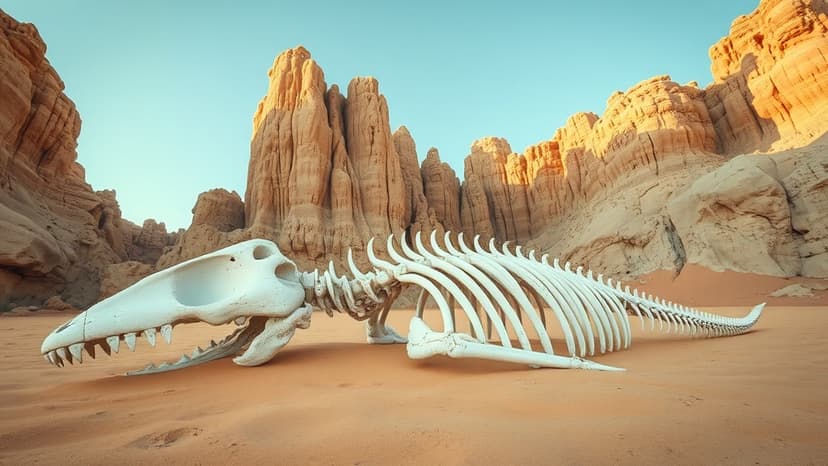
Egypt's Western Desert hides a remarkable secret: the Valley of the Whales, or Wadi al-Hitan. This UNESCO World Heritage site is home to hundreds of fossilized skeletons belonging to Archaeoceti, some of the earliest known whales. These ancient remains provide unparalleled insight into a significant evolutionary journey.
Around 40 million years ago, during the Eocene epoch, the landscape we now know as the Western Desert was covered by a warm, shallow sea. This sea was connected to the ancient Tethys Ocean, and over millennia, the remains of marine life settled and were preserved.
The fossils at Wadi al-Hitan are exceptionally important because they display clear evidence of the transition from land-dwelling mammals to fully aquatic whales. Some specimens even exhibit remnants of hind limbs, underscoring the evolutionary process.
This concentration and quality of fossils make Wadi al-Hitan the premier global location for studying whale evolution. Beyond whale remains, the site also yields fossils of sharks, rays, and other marine creatures, allowing scientists to reconstruct the ancient ecosystem.