Home / Science / Edison's Light Bulb May Have Created Graphene
Edison's Light Bulb May Have Created Graphene
25 Jan
Summary
- Thomas Edison's 1879 light bulb experiments might have produced graphene.
- Researchers recreated Edison's process yielding turbostratic graphene.
- Early 20th-century technology may hold undiscovered material science secrets.
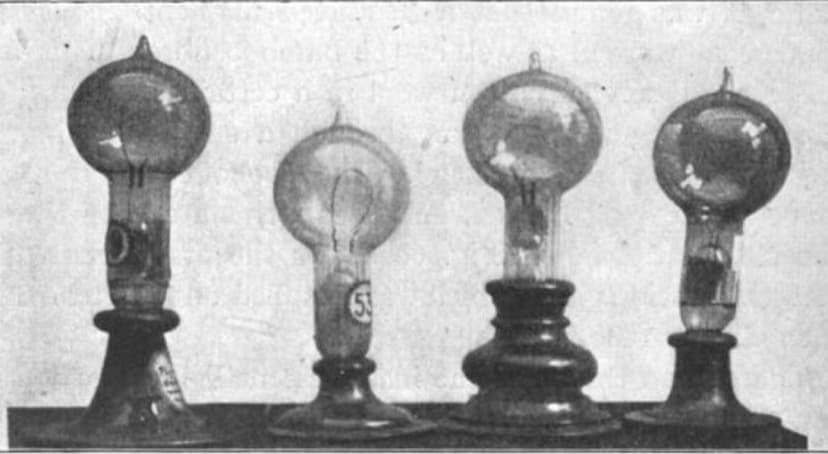
Thomas Edison's pioneering work on incandescent light bulbs in 1879 may have unintentionally yielded graphene, a revolutionary material composed of a single layer of carbon atoms. This discovery comes from a recent study published in ACS Nano, where scientists explored historical experiments with a modern scientific lens.
Researchers recreated Edison's process, heating carbon-based filaments to extreme temperatures between 2000 to 3000 degrees C. Using artisan bamboo filaments in replica Edison-style light bulbs powered by a 110-volt source, they observed a "lustrous silver" change in the carbon filament. Subsequent analysis revealed parts of the filament had transformed into turbostratic graphene.
While definitive proof is elusive, as Edison lacked the means to detect graphene, the findings underscore the potential for historical technologies to hold undiscovered scientific insights. The study suggests that revisiting other early technologies, such as vacuum tubes or arc lamps, could reveal accidental material creations previously overlooked.


