Home / Science / Rapa Nui's Giants: Clan Work, Not Chiefs, Shaped Easter Island
Rapa Nui's Giants: Clan Work, Not Chiefs, Shaped Easter Island
27 Nov, 2025
Summary
- A new 3D quarry model reveals 426 unfinished moai statues.
- Evidence suggests multiple independent work areas, not centralized control.
- Clan-based production challenges previous theories of hierarchical leadership.
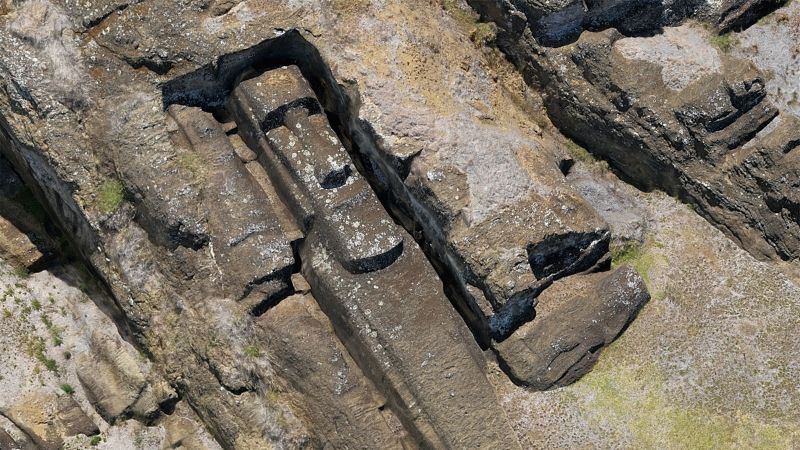
Archaeologists have utilized advanced 3D modeling of Easter Island's Rano Raraku quarry to uncover new details about the creation of its famous moai statues. This innovative approach, employing photogrammetry with drone imagery, has yielded a detailed model showcasing 426 moai in various stages of completion. The analysis points towards decentralized production, suggesting that individual clans, rather than a singular hierarchical leadership, were responsible for quarrying and carving these immense stone figures.
The researchers identified 30 distinct quarrying zones, implying multiple independent work sites. This distribution of activity supports the theory that statue production was managed by various kin groups, with each potentially overseeing different phases of the process. Such a decentralized model contrasts with earlier hypotheses that a powerful, island-wide authority coordinated the monumental effort, offering a fresh perspective on Rapa Nui's complex societal structure.
This research contributes to a revised understanding of Easter Island's history, portraying a resilient community that adapted to its isolated environment. By challenging the notion of a single leadership driving unsustainable practices, the findings suggest that autonomous decision-making by smaller groups might have prevented a catastrophic ecological collapse. The study highlights the complexity of Rapa Nui society, moving beyond simplistic narratives of resource exploitation and societal failure.