Home / Science / Humanity's 9.1 Quadrillion Year Escape Plan
Humanity's 9.1 Quadrillion Year Escape Plan
4 Aug
Summary
- A sunshade could shield Earth from the Sun's expansion.
- Jupiter's resources might power fusion reactors for an artificial sun.
- Earth's orbit could be extended using particle beams.
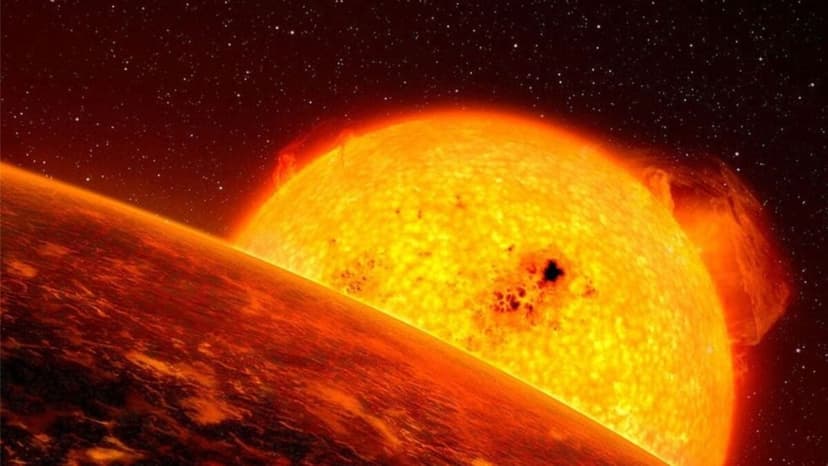
Earth's habitability faces a definitive end in one billion years as the Sun expands and eventually dies. However, independent researcher Gabriel Harry has outlined audacious megaengineering plans to safeguard humanity against this and other long-term threats. His proposals, detailed on arXiv, aim to extend Earth's habitable lifespan to an astounding 9.1 million billion years.
The initial phase involves constructing a colossal sunshade, 435,000 miles wide, positioned beyond the Moon's orbit. This immense structure, primarily made of aluminum mined from the Moon, would effectively block the Sun's destructive radiation as it begins to expand. The project would also require vast resources from the asteroid belt for its anchoring tether.
Following the sunshade deployment, a new challenge arises: the absence of sunlight. Harry suggests repurposing Jupiter as a source of helium and hydrogen for deep-atmosphere fusion reactors. These reactors would generate energy to create an artificial sun, beaming warmth and light back to Earth. Furthermore, Jupiter could aid in moving Earth to a safer orbital distance.


