Home / Science / Journey to Earth's Core: New Tech Unlocks Secrets
Journey to Earth's Core: New Tech Unlocks Secrets
26 Mar
Summary
- Advanced seismic imaging uses full-waveform inversion for high-definition Earth scans.
- New techniques are vital for energy exploration and carbon capture storage.
- Distributed acoustic sensing uses fiber optics to monitor subsurface conditions.
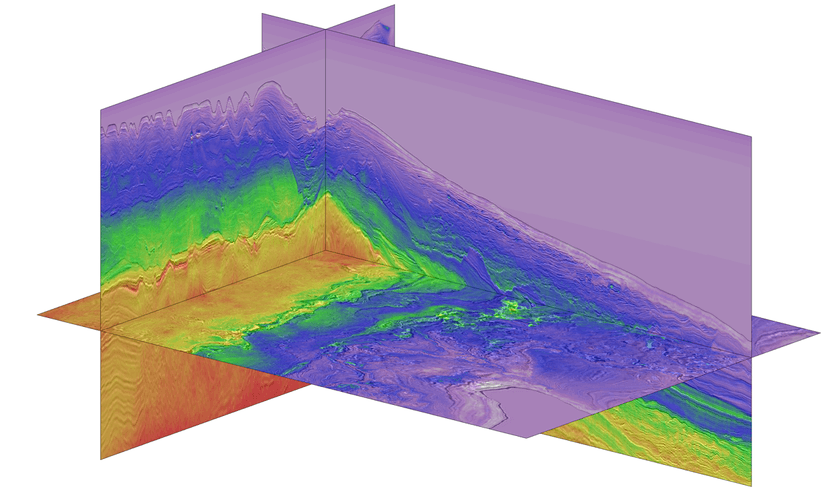
Jules Verne's 19th-century fantasy of exploring Earth's interior has become a scientific pursuit, driven by the need to understand substructures for energy and climate initiatives. Modern geoscientists use sophisticated methods to create detailed 3D images of the planet's interior.
Full-waveform inversion (FWI), developed from physicist Albert Tarantola's work, processes seismic data comprehensively. This technique reverse-engineers subsurface structures by comparing simulated wave reflections against real-world measurements, yielding unprecedented detail.
FWI revolutionized fossil fuel exploration and is now essential for identifying suitable sites for carbon capture and storage (CCS). It ensures injected carbon dioxide remains safely contained, a critical factor for climate change mitigation efforts.
Distributed acoustic sensing (DAS) offers another cutting-edge approach. By using underground fiber optic cables, DAS measures minute vibrations, effectively turning the cable into a dense network of sensors. This provides a high-definition view of subsurface composition and changes over time.
DAS technology is particularly significant for long-term monitoring of CCS sites, helping to detect potential leaks and meet regulatory requirements cost-effectively. Viridien emphasizes its high-performance computing capabilities in driving these innovations.
Advancements in data analysis and high-performance computing empower scientists to tackle complex challenges. This ongoing journey to understand Earth's interior, powered by innovative technology, echoes Verne's imaginative exploration, bringing scientists closer to a true representation of the planet's depths.