

Home / Science / Earth's Night Glow: A Patchwork of Light and Dark
Earth's Night Glow: A Patchwork of Light and Dark
8 Apr
Summary
- Global nighttime light increased 16% between 2014 and 2022.
- Sub-Saharan Africa and Southeast Asia saw significant light surges.
- Europe experienced a deliberate 4% decrease in nighttime light.
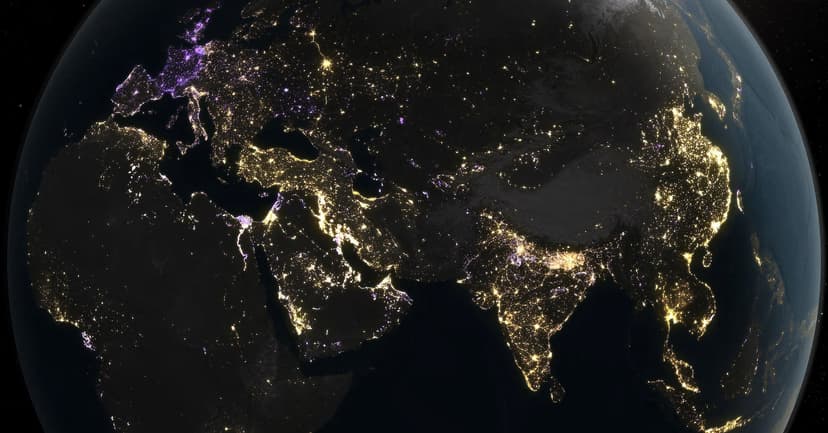
Daily satellite observations from 2014 to 2022 show a 16% net increase in global nighttime light, challenging the notion of steady brightening. The Earth's nightscape is revealed as highly volatile, with significant regional differences.
Emerging economies, particularly in sub-Saharan Africa and Southeast Asia, experienced dramatic brightening due to rapid urbanization and electrification. Countries like Somalia and Cambodia led this surge.
Conversely, Europe saw a 4% net decrease in nighttime light. This deliberate dimming was driven by energy conservation mandates and transitions to energy-efficient LED lighting.
Some regions experienced abrupt dimming due to natural disasters, conflicts, or economic crises, such as Ukraine and Lebanon. The United States, however, showed a 6% increase, with complex variations across its regions.
This shifting pattern highlights the dynamic interplay of economic growth, infrastructure development, and policy interventions on Earth's illumination.
