Home / Science / Mammal Ancestor Gave Live Birth 95 Million Years Earlier
Mammal Ancestor Gave Live Birth 95 Million Years Earlier
13 Aug
Summary
- Cynodont ancestor Chiniquodon theotonicus lived 236 million years ago.
- Fossil analysis reveals a neonatal growth line indicating live birth.
- Live birth in cynodonts originated 95 million years earlier than thought.
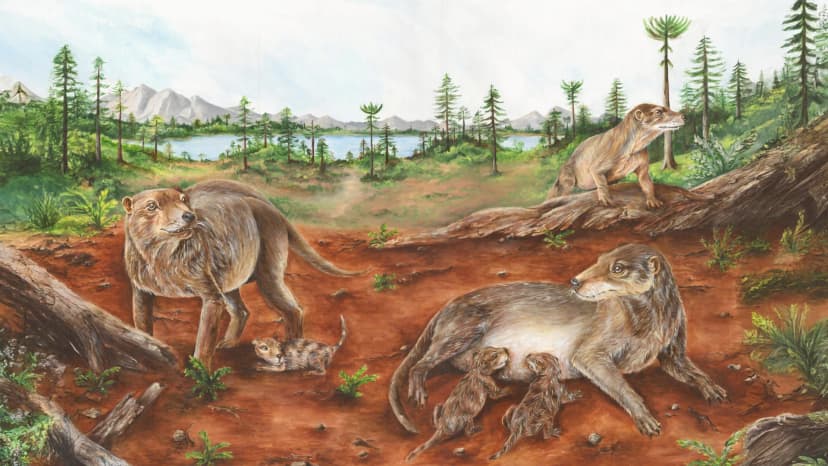
Evidence suggests that live birth may have evolved in mammalian ancestors far earlier than scientists previously understood. A study published in Frontiers in Mammal Science presents compelling evidence that at least one cynodont species, Chiniquodon theotonicus, was viviparous, meaning it gave birth to live young.
This remarkable discovery, based on the analysis of a fossil found in Argentina, indicates that live birth originated in the mammalian lineage approximately 95 to 90 million years earlier than current estimates. The research team identified a neonatal line in the fossil's bone structure, a growth ring formed shortly after birth, suggesting live offspring.
Further calculations comparing the newborn's estimated body mass to its adult size showed a ratio similar to modern placental mammals, distinguishing it from reptiles and birds. This challenges the long-held mystery surrounding the evolution of live birth in mammals.
The findings imply that traits considered more recent evolutionary developments may have been present in cynodonts much earlier. This opens new avenues for understanding the evolutionary trajectory of early mammals and their reproductive strategies.


