Home / Science / Dolly the Sheep: The Dawn of Mammal Cloning
Dolly the Sheep: The Dawn of Mammal Cloning
14 Jul
Summary
- Dolly the sheep was the first mammal cloned from an adult cell.
- Her birth in 1996 sparked global debate on cloning ethics and safety.
- Cloning technology, though imperfect, advanced regenerative medicine research.
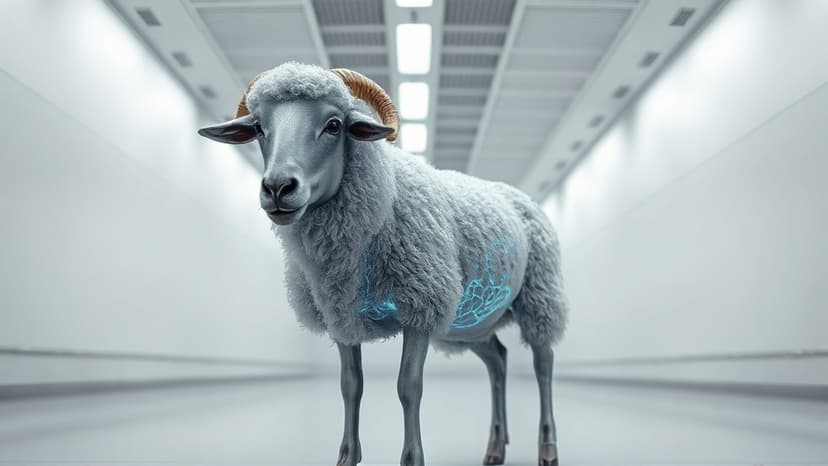
Dolly the sheep, born on July 5, 1996, at Scotland's Roslin Institute, holds the distinction of being the first mammal successfully cloned from an adult cell. Originally code-named "6LL3," she was later named Dolly, reportedly after singer Dolly Parton, due to the mammary gland cell origin of the donor tissue. The announcement of Dolly's existence in February 1997 triggered significant global debate.
Proponents championed cloning for its potential to revolutionize medicine, envisioning organ-donor animals and therapies for diseases like Alzheimer's. However, widespread ethical concerns and fears of eventual human cloning dominated the discussion, with many questioning the safety of the technology. Dolly lived to reproduce, having four lambs, but was diagnosed with arthritis and lung disease, leading to her being put down on February 14, 2003, at six years old.
Dolly was created using somatic cell nuclear transfer, a complex process involving the fusion of a donor cell nucleus with a de-nucleated egg cell and implantation into a surrogate. This groundbreaking research, despite its inefficiencies—requiring nearly 277 attempts for Dolly—led to the discovery of induced pluripotent stem cells, now vital for disease research and regenerative medicine.


