Home / Science / Dogs Read Your Emotions Better Than Apes
Dogs Read Your Emotions Better Than Apes
11 Aug
Summary
- Dogs can distinguish negative human emotions like fear and sadness.
- Happy human faces activate reward centers in dogs' brains.
- Dogs understand human emotions better than chimpanzees do.
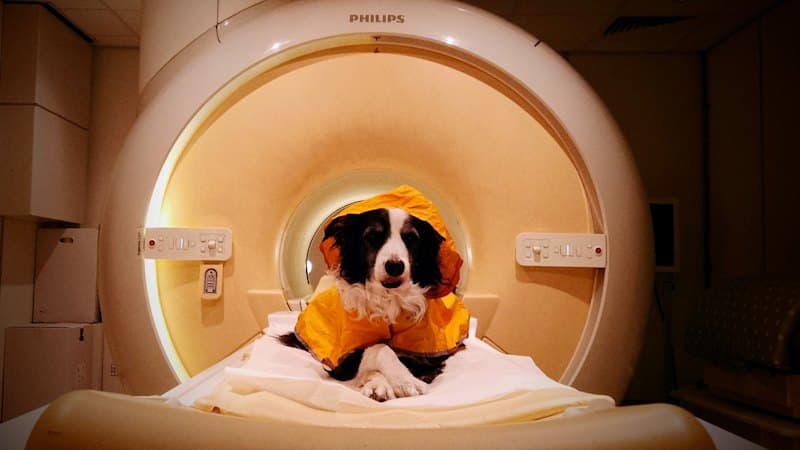
Groundbreaking research conducted in Hungary and Mexico reveals that dogs possess a remarkable ability to interpret human emotions, surpassing even our closest evolutionary relatives, chimpanzees. A study involving 14 dogs, including various breeds, utilized MRI scans to observe brain activity in response to different human facial expressions.
During the study, dogs were trained to remain still within an MRI machine. Researchers presented them with images of happy, sad, angry, fearful, and neutral human faces. Happy expressions triggered activity in the temporal cortex and caudate nucleus, areas associated with face recognition, emotional cues, and rewards, indicating that smiles hold positive significance for dogs.
Negative emotions elicited different responses. Fear and sadness activated a visual processing region, while anger stimulated distinct brain areas. While dogs showed unique reactions to happiness and could differentiate some negative emotions, their ability to distinguish between sadness and anger was less pronounced. The findings suggest that dogs interpret human happiness as a reward, reinforcing the idea that smiling at dogs is beneficial.
Experts note that while the study's sample size was small, it provides valuable insights into canine emotional processing. Dogs appear to respond more strongly to fear and anger, which are crucial for signaling potential danger or threat. Conversely, sadness is less relevant to their immediate safety. Beyond facial expressions, dogs also process emotions through tone of voice, body language, and scent, with emerging evidence highlighting their sensitivity to fear and anxiety odors.
Furthermore, recent studies indicate that thousands of years of domestication have rewired modern dogs' brains, enhancing their capacity to process human words and vocal cues. This close co-evolution has made dogs highly attuned to human behavior. However, humans are not always as adept at reading their pets, as demonstrated by the common misconception of canine guilt, which is often a learned submissive response to owner anger.


