Home / Science / Almost Invisible Galaxy Hints at Dark Matter's Secrets
Almost Invisible Galaxy Hints at Dark Matter's Secrets
3 Mar
Summary
- CDG-2, a galaxy composed of over 99.9% dark matter, has been discovered.
- Researchers used globular clusters to detect the faint galaxy.
- This discovery offers a clearer view of dark matter's behavior.
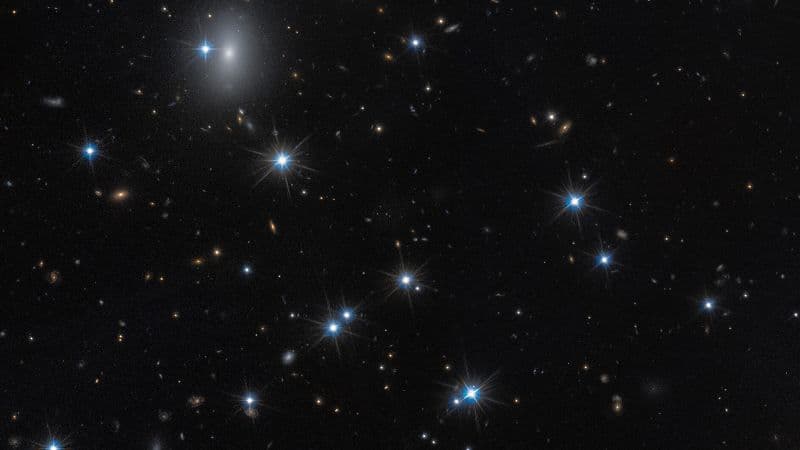
Astronomers have identified Candidate Dark Galaxy-2 (CDG-2), an exceptionally faint galaxy composed predominantly of dark matter. This celestial body, detected using the Hubble Space Telescope and other observatories, is estimated to be at least 99.9% dark matter, making it one of the most dark matter-heavy galaxies ever observed.
The research team employed a novel approach by searching for globular clusters, which are dense groupings of old stars. These clusters are bright even when their host galaxy is not, allowing astronomers to infer the presence of a galaxy like CDG-2. This method is particularly valuable for finding "dark galaxies," which contain very few, if any, stars.
Experts suggest that CDG-2 may have formed when larger galaxies stripped it of the gas needed to create new stars early in its existence. This process left behind a dark matter halo and existing globular clusters, resulting in a galaxy with minimal visible light. Studying such objects provides a cleaner view of dark matter's behavior, unaffected by the gravitational influence of abundant normal matter.