feedzop-word-mark-logo
searchLogin
Feedzop
homeFor YouUnited StatesUnited States
You
bookmarksYour BookmarkshashtagYour Topics
Trending
trending

Twitch restricts Australian teens

trending

Falcons stun Buccaneers with comeback

trending

Kuzma, Portis lead Bucks victory

trending

Giannis Antetokounmpo sidelined against Celtics

trending

Rockets beat Clippers at home

trending

21 Savage releases new album

trending

Nas Daily visits Israel

trending

Panthers NFC South playoff hopes

trending

Overseas travel vaccine alert

Terms of UsePrivacy PolicyAboutJobsPartner With Us

© 2025 Advergame Technologies Pvt. Ltd. ("ATPL"). Gamezop ® & Quizzop ® are registered trademarks of ATPL.

Gamezop is a plug-and-play gaming platform that any app or website can integrate to bring casual gaming for its users. Gamezop also operates Quizzop, a quizzing platform, that digital products can add as a trivia section.

Over 5,000 products from more than 70 countries have integrated Gamezop and Quizzop. These include Amazon, Samsung Internet, Snap, Tata Play, AccuWeather, Paytm, Gulf News, and Branch.

Games and trivia increase user engagement significantly within all kinds of apps and websites, besides opening a new stream of advertising revenue. Gamezop and Quizzop take 30 minutes to integrate and can be used for free: both by the products integrating them and end users

Increase ad revenue and engagement on your app / website with games, quizzes, astrology, and cricket content. Visit: business.gamezop.com

Property Code: 5571

Home / Science / Ancient Plants Heat Up to Attract Beetles

Ancient Plants Heat Up to Attract Beetles

12 Dec

•

Summary

  • Cycads use heat to attract beetles, an ancient pollination method.
  • Beetles sense infrared heat from cones using specialized antennae.
  • This thermal signaling may be the oldest form of plant pollination.
Ancient Plants Heat Up to Attract Beetles

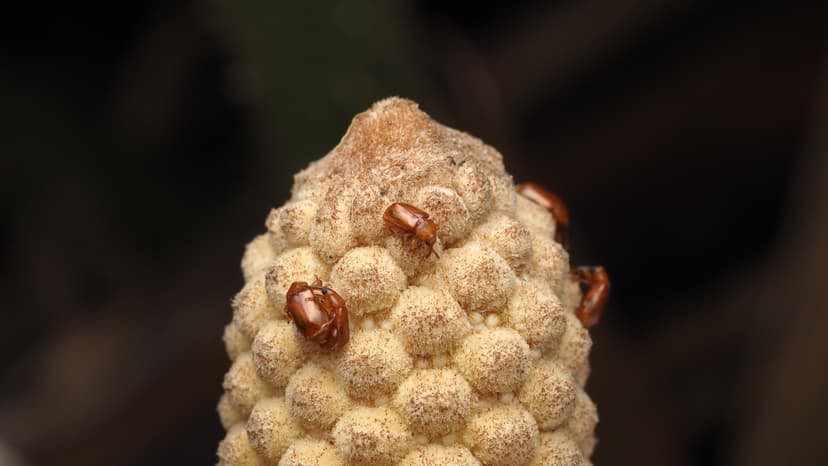
Cycads, a plant lineage dating back 250 million years, utilize a fascinating method to ensure reproduction: they generate heat. These tropical plants, resembling palms, develop cone-like structures that warm up, emitting a glow that attracts beetles. This thermal attraction is crucial for pollination, with evidence suggesting it's a foundational mechanism for plant-insect relationships. The heat not only lures beetles but also guides them through the plant's reproductive cycle.

Researchers discovered that beetles are drawn to the infrared signature of the heat, a signal invisible to humans but detectable by their specialized antennae. Studies on beetle antennae revealed genetic similarities to heat-sensing mechanisms in snakes and mosquitoes. Experiments using 3-D printed cones demonstrated that heat alone, without scent or visual cues, effectively attracts pollinators, highlighting its significance.

This heat-based signaling is believed to be among the oldest forms of pollination, potentially predating colorful flowers and elaborate scents. While some experts propose this thermal communication as the original pollination strategy, others maintain that scent enhancement also played a significant role. The research opens new avenues for understanding the ancient co-evolution of plants and their insect partners.


Disclaimer: This story has been auto-aggregated and auto-summarised by a computer program. This story has not been edited or created by the Feedzop team.
Cycads attract beetles by generating heat from their reproductive cones, which is sensed by the beetles' specialized antennae.
The study suggests that cycad pollination using heat and infrared signals might be the oldest form of plant-pollinator communication.
Beetles cannot see infrared heat, but their antennae are equipped to sense its thermal signature, guiding them to the cycads.

Read more news on

Scienceside-arrow

You may also like

Scientist Discovers 1,000+ New Species!

6 Dec • 37 reads

article image

Ancient Crabs Face Coastal Extinction

1 Dec • 74 reads

article image

Expert Warns: Your Fir Might Be Crawling!

30 Nov • 61 reads

article image

Rats Evolve Deadly New Hunting Tactic

26 Nov • 86 reads

article image

Wales' Wildlife Crisis: 3,000 Species at Risk

25 Nov • 92 reads

article image