Home / Science / Lab Creates Star Dust to Unlock Life's Origins
Lab Creates Star Dust to Unlock Life's Origins
1 Feb
Summary
- Cosmic dust is recreated in a lab to study its origins.
- This dust contains organic compounds essential for life's building blocks.
- Research aims to understand how meteorites acquired organic matter.
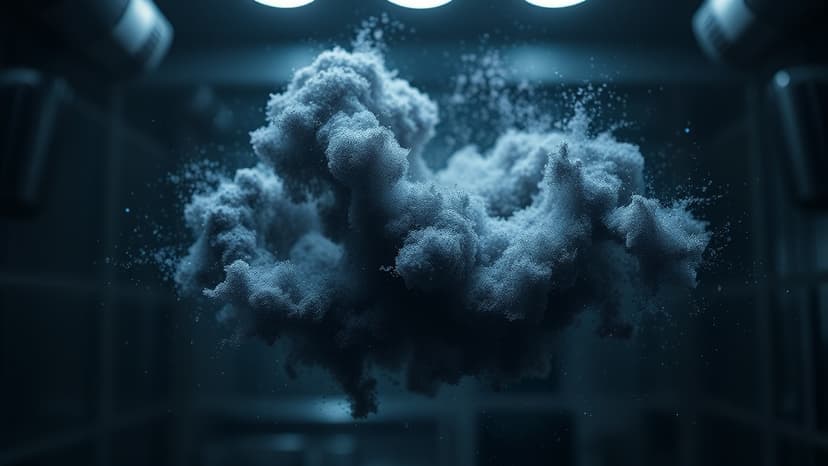
Scientists have successfully recreated cosmic dust in a laboratory setting, a feat that promises to shed light on how life began on Earth. This simulated cosmic dust contains essential organic compounds, including CHON molecules, which are considered the chemical building blocks of life.
The research is crucial for understanding the origins of organic matter found in meteorites. Scientists are investigating whether these molecules formed on Earth, arrived from comets and asteroids, or were delivered during the solar system's formation.
To create the dust analogue, researchers used a vacuum to mimic space conditions and introduced gases found around dying stars. A high voltage energized the mixture, creating a plasma that yielded dust similar to that found in space. This method allows for the study of interstellar dust, which cannot be collected directly.
This work opens possibilities for further experiments, potentially simulating early life formation on different planets using this type of cosmic dust. The findings were published in the Astrophysical Journal.