feedzop-word-mark-logo
searchLogin
Feedzop
homeFor YouUnited StatesUnited States
You
bookmarksYour BookmarkshashtagYour Topics
Trending
Terms of UsePrivacy PolicyAboutJobsPartner With Us

© 2026 Advergame Technologies Pvt. Ltd. ("ATPL"). Gamezop ® & Quizzop ® are registered trademarks of ATPL.

Gamezop is a plug-and-play gaming platform that any app or website can integrate to bring casual gaming for its users. Gamezop also operates Quizzop, a quizzing platform, that digital products can add as a trivia section.

Over 5,000 products from more than 70 countries have integrated Gamezop and Quizzop. These include Amazon, Samsung Internet, Snap, Tata Play, AccuWeather, Paytm, Gulf News, and Branch.

Games and trivia increase user engagement significantly within all kinds of apps and websites, besides opening a new stream of advertising revenue. Gamezop and Quizzop take 30 minutes to integrate and can be used for free: both by the products integrating them and end users

Increase ad revenue and engagement on your app / website with games, quizzes, astrology, and cricket content. Visit: business.gamezop.com

Property Code: 5571

Home / Science / Lab Creates Star Dust to Unlock Life's Origins

Lab Creates Star Dust to Unlock Life's Origins

1 Feb

•

Summary

  • Cosmic dust is recreated in a lab to study its origins.
  • This dust contains organic compounds essential for life's building blocks.
  • Research aims to understand how meteorites acquired organic matter.
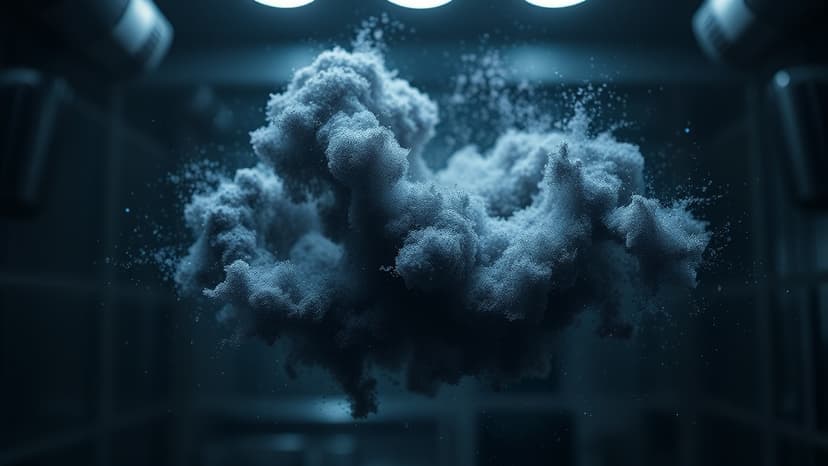
Lab Creates Star Dust to Unlock Life's Origins

Scientists have successfully recreated cosmic dust in a laboratory setting, a feat that promises to shed light on how life began on Earth. This simulated cosmic dust contains essential organic compounds, including CHON molecules, which are considered the chemical building blocks of life.

The research is crucial for understanding the origins of organic matter found in meteorites. Scientists are investigating whether these molecules formed on Earth, arrived from comets and asteroids, or were delivered during the solar system's formation.

To create the dust analogue, researchers used a vacuum to mimic space conditions and introduced gases found around dying stars. A high voltage energized the mixture, creating a plasma that yielded dust similar to that found in space. This method allows for the study of interstellar dust, which cannot be collected directly.

This work opens possibilities for further experiments, potentially simulating early life formation on different planets using this type of cosmic dust. The findings were published in the Astrophysical Journal.

Disclaimer: This story has been auto-aggregated and auto-summarised by a computer program. This story has not been edited or created by the Feedzop team.
Scientists recreated cosmic dust by using a vacuum to mimic space conditions and introducing gases found around dying stars, then energizing the mixture with high voltage to create a plasma.
CHON molecules are organic compounds of carbon, hydrogen, oxygen, and nitrogen, considered the chemical building blocks of life.
Recreating cosmic dust helps scientists understand the origins of organic matter in meteorites and how life may have begun on Earth.

Read more news on

Scienceside-arrow
trending

Cognizant profit rises 18.7%

trending

Qualcomm stock falls on shortages

trending

JSW Cement Q3 profit rises

trending

HAL shares tumble after AMCA

trending

Bharat Taxi launches in Delhi

trending

CTET admit card releasing soon

trending

Suzlon Energy Q3 results up

trending

Trent share price cautious outlook

trending

Pakistan India T20 boycott

You may also like

Cosmic 'Missing Link' for Life Discovered

30 Jan • 27 reads

article image

Webb Telescope Unveils Dark Matter Cosmic Web

26 Jan • 53 reads

article image

Severe Storm to Light Up Australian Skies Tonight!

20 Jan • 115 reads

article image

Ring Nebula's Iron Bar: A Glimpse of Earth's Cosmic Demise?

16 Jan • 107 reads

article image

Asteroid Mining: Space Rocks Hold Rare Earth Elements

1 Jan • 118 reads

article image