feedzop-word-mark-logo
searchLogin
Feedzop
homeFor YouUnited StatesUnited States
You
bookmarksYour BookmarkshashtagYour Topics
Trending
trending

Jaguars overwhelm Jets 48-20

trending

Mbappe scores against Alaves

trending

Trevor Lawrence shines, 5 TDs

trending

Patriots Bills Week 15 Game

trending

NFL playoff picture Week 15

trending

Rams extend Puka Nacua contract

trending

NHL threatens 2026 Olympics

trending

Nick Reiner killed his parents

trending

Snow causes school delays

Terms of UsePrivacy PolicyAboutJobsPartner With Us

© 2025 Advergame Technologies Pvt. Ltd. ("ATPL"). Gamezop ® & Quizzop ® are registered trademarks of ATPL.

Gamezop is a plug-and-play gaming platform that any app or website can integrate to bring casual gaming for its users. Gamezop also operates Quizzop, a quizzing platform, that digital products can add as a trivia section.

Over 5,000 products from more than 70 countries have integrated Gamezop and Quizzop. These include Amazon, Samsung Internet, Snap, Tata Play, AccuWeather, Paytm, Gulf News, and Branch.

Games and trivia increase user engagement significantly within all kinds of apps and websites, besides opening a new stream of advertising revenue. Gamezop and Quizzop take 30 minutes to integrate and can be used for free: both by the products integrating them and end users

Increase ad revenue and engagement on your app / website with games, quizzes, astrology, and cricket content. Visit: business.gamezop.com

Property Code: 5571

Home / Science / Cosmic Clues Expose 30,000 Years of Arctic Sea Ice Changes

Cosmic Clues Expose 30,000 Years of Arctic Sea Ice Changes

10 Nov

•

Summary

  • Scientists reconstruct Arctic sea ice history using cosmic dust
  • Arctic warming nearly 4 times faster than rest of planet
  • Oldest, thickest sea ice now only 5% of total
Cosmic Clues Expose 30,000 Years of Arctic Sea Ice Changes

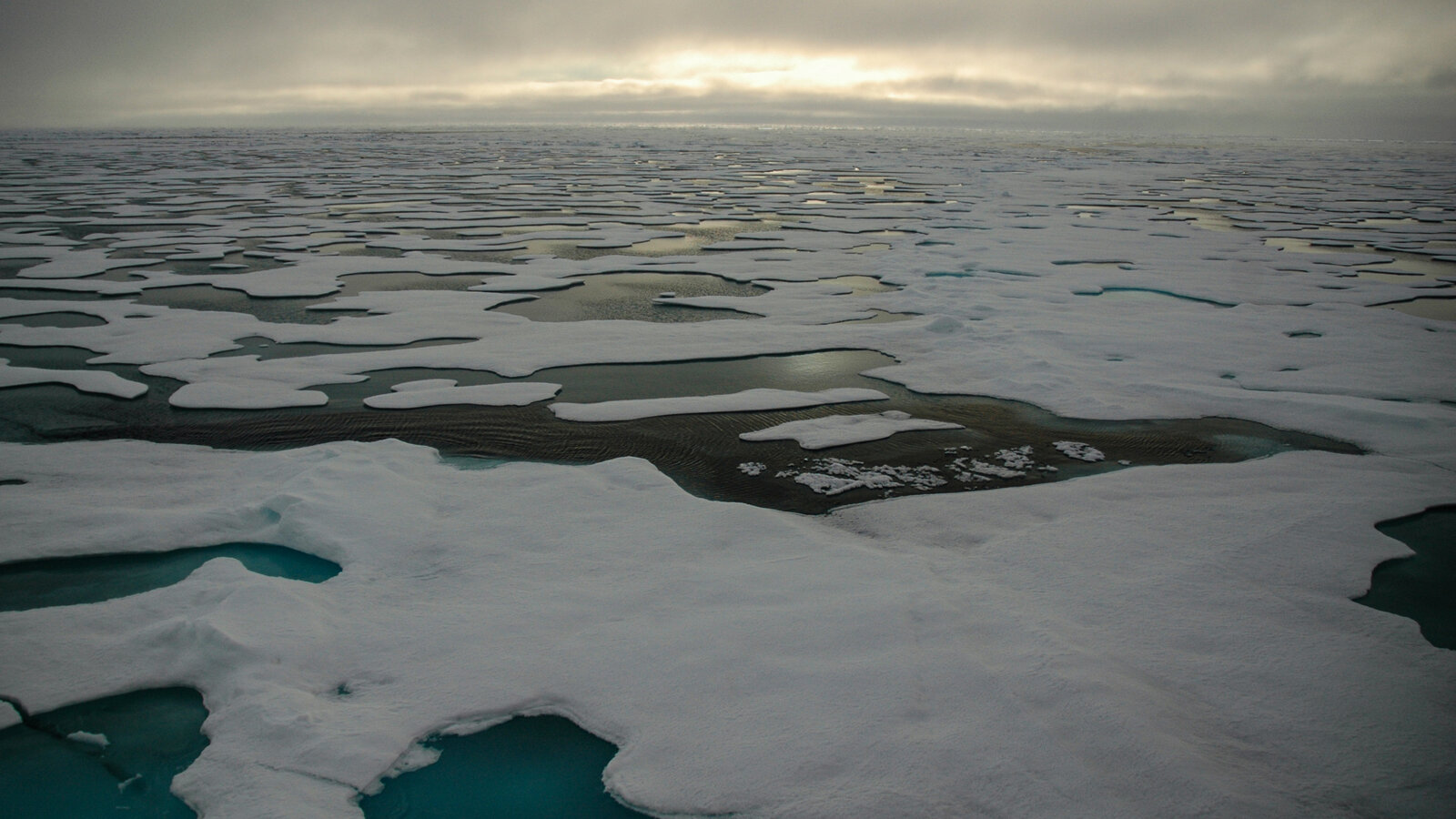
In a groundbreaking study published on November 10, 2025, scientists have reconstructed 30,000 years of changes to sea ice in the Arctic Ocean. By analyzing traces of cosmic dust embedded in seafloor sediments, the researchers were able to track the presence or absence of sea ice over millennia.

The study, led by Frankie Pavia of the University of Washington, found that during the last ice age, hardly any cosmic dust reached the ocean floor, indicating a constant layer of sea ice. However, as the climate gradually warmed to pre-industrial levels, more of these space particles accumulated in the seabed, signaling a decline in sea ice coverage.

The findings provide critical insights into how the Arctic has responded to past climate shifts. As the planet continues to warm due to human-caused greenhouse gas emissions, the Arctic is transforming rapidly. This year is on track to be the second or third warmest on record, and the region is warming nearly four times faster than the rest of the world.


The study's analysis reveals that only 5% of the oldest and thickest sea ice remains today, with the rest becoming thinner and more fragile. This loss of ice has far-reaching consequences, from disrupting marine ecosystems to opening up new shipping routes and raising national security concerns.

The researchers hope that by using cosmic dust as a proxy for past sea ice, they can better understand the Arctic's response to different climate conditions, which could help predict its future trajectory.

Disclaimer: This story has been auto-aggregated and auto-summarised by a computer program. This story has not been edited or created by the Feedzop team.
Cosmic dust found in seafloor sediments is providing scientists with a 30,000-year history of Arctic sea ice changes, showing how the region has responded to past climate shifts.
The Arctic is warming nearly 4 times faster than the rest of the planet, with only 5% of the oldest and thickest sea ice remaining today. This rapid melting is disrupting marine ecosystems and opening up new shipping routes.
Scientists are using traces of cosmic dust embedded in seafloor sediments as a proxy to reconstruct past sea ice coverage in the Arctic, providing a more comprehensive understanding of the region's climate history.

Read more news on

Scienceside-arrow

You may also like

Heat Harms Young Minds: Study Reveals Developmental Risks

11 Dec • 22 reads

article image

AI Revolutionizes Arctic Ecology: Predicting Risks to Flora and Fauna

11 Nov • 106 reads

article image

Cutting Pollution Backfires: Clouds Lose Reflectivity, Accelerating Global Warming

5 Nov • 175 reads

article image

Insect Decline Alarms Scientists in Remote Colorado Meadow

2 Nov • 175 reads

article image

Arctic Tern's Epic 70,000 km Migration Revealed

17 Oct • 175 reads

article image