Home / Science / Cosmic Clues Expose 30,000 Years of Arctic Sea Ice Changes
Cosmic Clues Expose 30,000 Years of Arctic Sea Ice Changes
10 Nov, 2025
Summary
- Scientists reconstruct Arctic sea ice history using cosmic dust
- Arctic warming nearly 4 times faster than rest of planet
- Oldest, thickest sea ice now only 5% of total
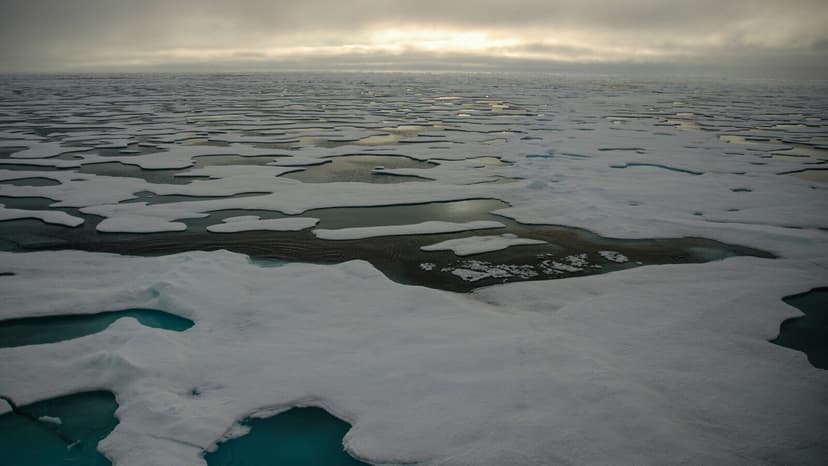
In a groundbreaking study published on November 10, 2025, scientists have reconstructed 30,000 years of changes to sea ice in the Arctic Ocean. By analyzing traces of cosmic dust embedded in seafloor sediments, the researchers were able to track the presence or absence of sea ice over millennia.
The study, led by Frankie Pavia of the University of Washington, found that during the last ice age, hardly any cosmic dust reached the ocean floor, indicating a constant layer of sea ice. However, as the climate gradually warmed to pre-industrial levels, more of these space particles accumulated in the seabed, signaling a decline in sea ice coverage.
The findings provide critical insights into how the Arctic has responded to past climate shifts. As the planet continues to warm due to human-caused greenhouse gas emissions, the Arctic is transforming rapidly. This year is on track to be the second or third warmest on record, and the region is warming nearly four times faster than the rest of the world.
The study's analysis reveals that only 5% of the oldest and thickest sea ice remains today, with the rest becoming thinner and more fragile. This loss of ice has far-reaching consequences, from disrupting marine ecosystems to opening up new shipping routes and raising national security concerns.
The researchers hope that by using cosmic dust as a proxy for past sea ice, they can better understand the Arctic's response to different climate conditions, which could help predict its future trajectory.