

Home / Science / Next Moon Landing: China Poised to Lead
Next Moon Landing: China Poised to Lead
26 Apr
Summary
- China and US vie to establish lunar bases.
- China's space program is well-funded and adheres to timelines.
- NASA relies on private firms for lunar lander development.
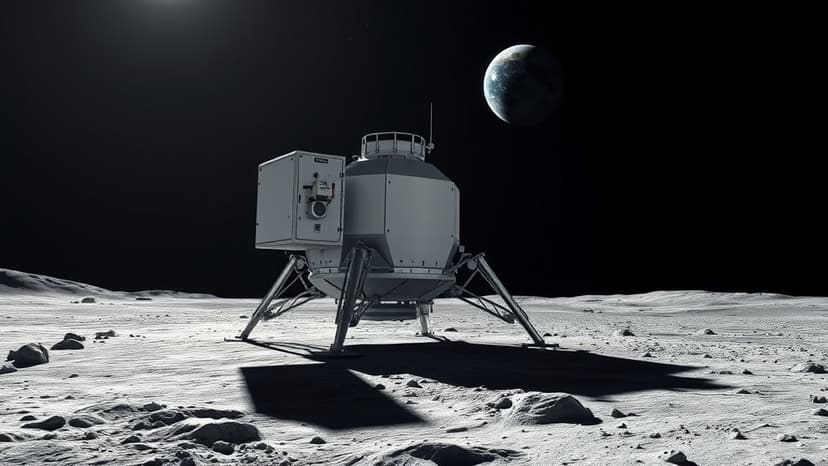
The United States and China are engaged in a significant space race to establish the first inhabited lunar bases, a competition that extends beyond mere symbolic victories. Both nations aim to secure resources and test technologies for future Mars missions, with China's National Space Administration (CNSA) demonstrating remarkable progress.
While NASA benefits from historical knowledge, its budget share has diminished, and its progress is subject to political shifts. In contrast, China's one-party system allows for consistent, long-term planning, free from the four-year governmental cycles that can affect NASA's decades-long projects.
To accelerate its efforts, NASA is partnering with private entities like SpaceX and Blue Origin for the development of crucial lunar landers. This collaborative approach, however, introduces potential delays as these private ventures race to meet demanding deadlines.
China's space program, established in the 1990s, has seen accelerated growth. It has achieved milestones such as retrieving samples from the lunar far side with the Chang'e-6 probe and plans to hunt for water ice at the south pole with Chang'e-7 in late 2026. The CNSA's human spaceflight missions, utilizing new rockets and capsules, are on track for lunar landings by 2030, potentially sooner than NASA's 2028 target.
Despite the competitive spirit, international collaboration is occurring, with European agencies contributing to Chinese missions due to their own limited lunar capabilities. This cooperation highlights a potential pathway for scientific advancement, though official US law prohibits collaboration with China's space agency.
