

Home / Science / China's Lunar Leap: A New Space Race?
China's Lunar Leap: A New Space Race?
2 Apr
Summary
- Both US and China aim for lunar south pole outposts.
- China's centralized control offers long-term project funding.
- NASA plans to sustain lunar presence, not just visit.
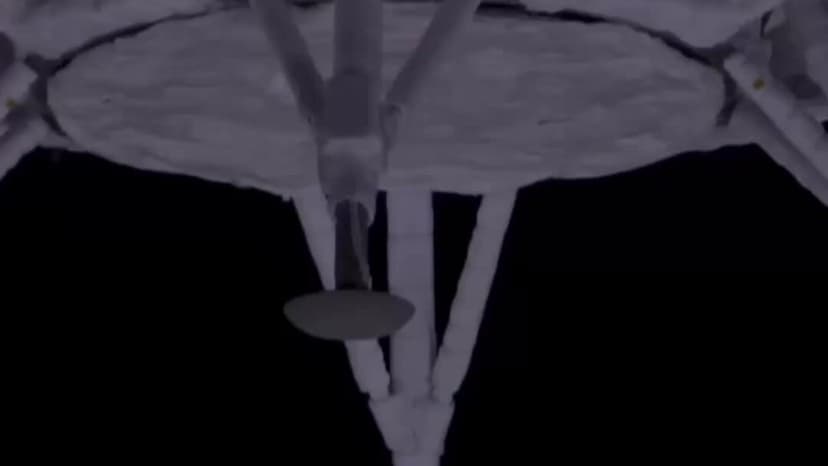
The United States and China are engaged in a new lunar space race, with both nations aiming to establish outposts at the moon's south pole. The goal is to harness resources like frozen water and to build nuclear-powered bases for future deep space missions.
NASA's Artemis program, targeting a 2028 return to the moon, faces challenges. Administrator Jared Isaacman acknowledged China might achieve its lunar landing target ahead of the US.
China's program benefits from centralized control, enabling long-term planning and funding. Notably, China is the only nation to have landed on and retrieved samples from the moon's far side. Its upcoming Chang'e 7 mission will explore the lunar south pole.
Chinese astronauts will initially land on the more accessible near side of the moon. This approach allows for greater scientific experimentation, as noted by lunar geologist Yuqi Qian. China's ambition appears less burdened by the pressure of a direct race.
For lunar missions, China plans to use the Long March 10 rocket and the Mengzhou spacecraft. The US uses the Space Launch System rocket and the Orion spacecraft, which recently completed its first crewed flyby. Both nations are developing specialized lunar landers and advanced spacesuits.
