feedzop-word-mark-logo
searchLogin
Feedzop
homeFor YouUnited StatesUnited States
You
bookmarksYour BookmarkshashtagYour Topics
Trending
Terms of UsePrivacy PolicyAboutJobsPartner With Us

© 2026 Advergame Technologies Pvt. Ltd. ("ATPL"). Gamezop ® & Quizzop ® are registered trademarks of ATPL.

Gamezop is a plug-and-play gaming platform that any app or website can integrate to bring casual gaming for its users. Gamezop also operates Quizzop, a quizzing platform, that digital products can add as a trivia section.

Over 5,000 products from more than 70 countries have integrated Gamezop and Quizzop. These include Amazon, Samsung Internet, Snap, Tata Play, AccuWeather, Paytm, Gulf News, and Branch.

Games and trivia increase user engagement significantly within all kinds of apps and websites, besides opening a new stream of advertising revenue. Gamezop and Quizzop take 30 minutes to integrate and can be used for free: both by the products integrating them and end users

Increase ad revenue and engagement on your app / website with games, quizzes, astrology, and cricket content. Visit: business.gamezop.com

Property Code: 5571

Home / Science / Study: Brain Comprehension Mirrors AI's Deep Layers

Study: Brain Comprehension Mirrors AI's Deep Layers

21 Jan

•

Summary

  • Brain processes spoken language in steps like AI.
  • Deep AI layers match later human brain activity.
  • New dataset aids study of brain's meaning formation.
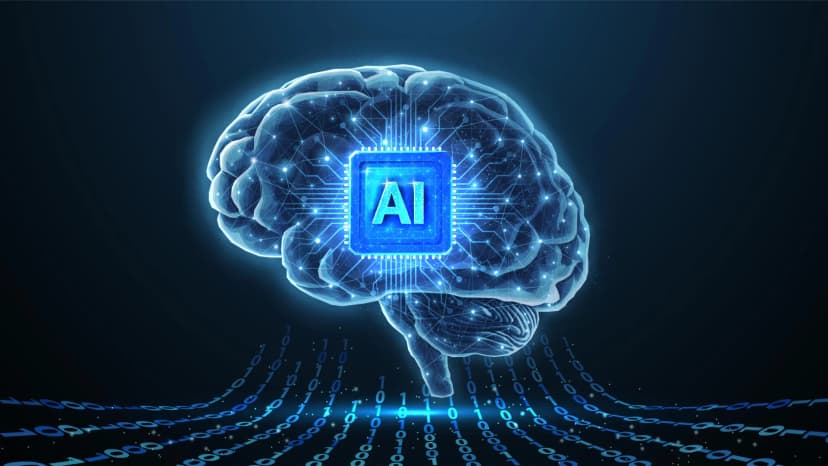
Study: Brain Comprehension Mirrors AI's Deep Layers

A groundbreaking study indicates that the human brain processes spoken language in a manner strikingly similar to sophisticated AI language models. Researchers observed brain activity from individuals listening to a story and discovered that later brain responses closely mirror the deeper layers of AI systems, especially within well-known areas like Broca's area. This finding suggests that language comprehension is a stepwise process, rather than solely based on fixed symbols and rigid hierarchies. The research challenges long-standing linguistic theories, pointing towards a more flexible, statistical approach where meaning gradually emerges from context. The study's findings were supported by a newly released public dataset, offering a valuable resource for future investigations into how the brain constructs meaning. Scientists tracked brain activity using electrocorticography recordings, finding a temporal match between neural signals and the layered processing within AI models such as GPT-2 and Llama 2. This suggests a convergence in how both biological and artificial systems build understanding over time. The team also noted that traditional linguistic elements like phonemes did not explain real-time brain activity as effectively as the contextual representations generated by AI models, reinforcing the idea of context-driven meaning formation in the brain.

Disclaimer: This story has been auto-aggregated and auto-summarised by a computer program. This story has not been edited or created by the Feedzop team.
The study found that the brain's stepwise processing of spoken language mirrors the layered architecture of AI language models like GPT-2.
Later brain responses in Broca's area showed a strong match with deeper AI layers, suggesting its involvement in complex language understanding.
Researchers have released a public dataset of neural recordings and language features to advance the study of language comprehension.

Read more news on

Scienceside-arrow
trending

CFTC modernizes crypto regulations

trending

JCPS bus crash reported

trending

Artemis II rocket on pad

trending

Earthquake near Elgin, SC

trending

Yahoo Mail, AOL down

trending

Louisville schools closed due weather

trending

NYC snowstorm this weekend

trending

Maryland snow storm this weekend

trending

Texas winter storm watch

You may also like

AI Progress Shifts: System Design Over Model Size

18 Jan • 15 reads

article image

Budget 2026: Powering India with Indigenous AI

18 Jan • 13 reads

article image

AI Bubble Fears Rise: Will 2026 Be the Burst?

15 Jan • 44 reads

article image

Robots Learn Like Humans with New AI Model

13 Jan • 40 reads

article image

AI Exposed: Hackers Exploit Proxy Flaws

12 Jan • 29 reads

article image