Home / Science / Brain Interface: New Hope for Mental Health
Brain Interface: New Hope for Mental Health
16 Mar
Summary
- BCI technology analyzes neural patterns for mental health treatment.
- It offers alternative pathways for patients unresponsive to medication.
- Noninvasive BCI products are affordable for household use.
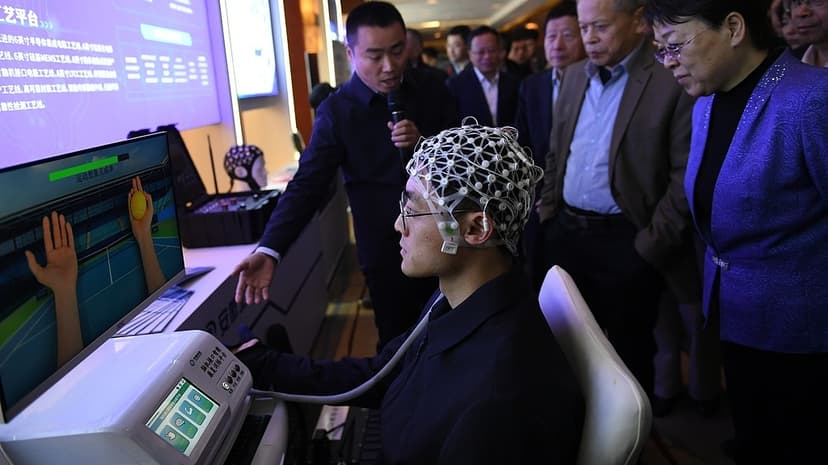
Brain-computer interface (BCI) technology is poised to transform mental health care by establishing a direct link between the brain and external devices. This innovation offers novel approaches to diagnosing, treating, and rehabilitating conditions such as depression, anxiety, and Alzheimer's disease.
A significant advantage of BCI is its potential to aid patients who do not respond to conventional medication, providing much-needed alternative treatment options. The technology analyzes neural patterns to detect specific brain signals associated with mental health issues.
Noninvasive BCI methods are particularly promising due to their safety, lower cost, and minimal side effects compared to invasive procedures. Affordable products, priced under 2,000 yuan ($290), are available for home use. China's inclusion of BCI in its Government Work Report signals a national commitment to fostering this frontier technology.
Companies are developing advanced BCI devices, including a third-generation noninvasive sleep-aid device expected for launch in the first half of 2026. High-density microelectrode arrays are also being utilized to precisely decode and encode brain signals, offering potential interventions for early-stage cognitive decline in diseases like Alzheimer's.