feedzop-word-mark-logo
searchLogin
Feedzop
homeFor YouUnited StatesUnited States
You
bookmarksYour BookmarkshashtagYour Topics
Trending
Terms of UsePrivacy PolicyAboutJobsPartner With Us

© 2026 Advergame Technologies Pvt. Ltd. ("ATPL"). Gamezop ® & Quizzop ® are registered trademarks of ATPL.

Gamezop is a plug-and-play gaming platform that any app or website can integrate to bring casual gaming for its users. Gamezop also operates Quizzop, a quizzing platform, that digital products can add as a trivia section.

Over 5,000 products from more than 70 countries have integrated Gamezop and Quizzop. These include Amazon, Samsung Internet, Snap, Tata Play, AccuWeather, Paytm, Gulf News, and Branch.

Games and trivia increase user engagement significantly within all kinds of apps and websites, besides opening a new stream of advertising revenue. Gamezop and Quizzop take 30 minutes to integrate and can be used for free: both by the products integrating them and end users

Increase ad revenue and engagement on your app / website with games, quizzes, astrology, and cricket content. Visit: business.gamezop.com

Property Code: 5571

Home / Science / Dino Diet: Baby Brachiosaurs Were Prey

Dino Diet: Baby Brachiosaurs Were Prey

30 Jan

•

Summary

  • Young sauropods, not adults, were primary prey for predators.
  • Fossil evidence from Colorado reconstructed a Jurassic food web.
  • Predators targeted easier meals like juveniles over adults.
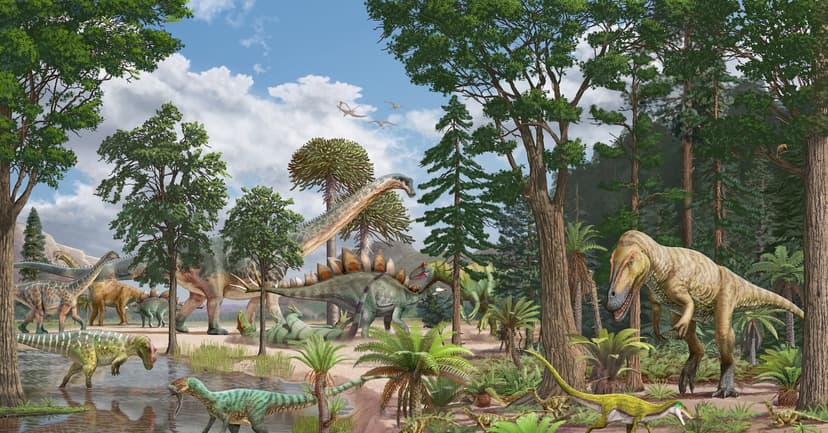
Dino Diet: Baby Brachiosaurs Were Prey

Paleontologists have reconstructed a detailed food web from the Jurassic Period, approximately 150 million years ago, indicating that young sauropods were a common prey item for carnivorous dinosaurs. The ecosystem, represented by numerous fossils found at the Dry Mesa Dinosaur Quarry in southwestern Colorado, featured at least six types of sauropods and five types of meat-eating dinosaurs.

Researchers concluded that baby and young juvenile sauropods, lacking the defenses of their larger counterparts, were the most accessible food source for top predators. Adult sauropods relied on their immense size and herd behavior for protection, making them too risky for most predators. However, their offspring, needing years to mature and lacking armor, presented a more manageable target.

The study utilized various evidence, including chemical analysis of tooth enamel and biomechanical models, to map predator-prey relationships. This allowed scientists to understand that hunting large adult sauropods like Brachiosaurus would have been a high-risk endeavor, leading predators to focus on juveniles, the sick, or the injured.

trending

Ohio snow emergency declared

trending

TikTok down in United States

trending

Andreeva matches Venus Williams' feat

trending

Warrington Hospital baby death

trending

Alexander Zverev advances in Australia

trending

Oilers host Capitals

trending

London celebrates Chinese New Year

trending

Liza Minnelli defends AI use

Disclaimer: This story has been auto-aggregated and auto-summarised by a computer program. This story has not been edited or created by the Feedzop team.
Jurassic predators primarily preyed on baby and young juvenile sauropods, such as young Brachiosaurs, as they were more accessible than large adults.
Young sauropods were targeted because they were relatively defenseless, slow-moving, and had not yet reached the size or defensive capabilities of adult sauropods.
The Jurassic food web was reconstructed using numerous fossils unearthed at the Dry Mesa Dinosaur Quarry in southwestern Colorado.

Read more news on

Scienceside-arrow

You may also like

T. Rex Grew Slower Than We Thought!

15 Jan • 57 reads

article image

Triceratops Once Roamed Europe, Fossils Reveal

10 Jan • 106 reads

article image

Dinosaur Footprints Found on Giant Alpine Rock Face

5 Jan • 193 reads

article image

Dinosaur Footprints: Italy's Triassic Treasure Unearthed

17 Dec, 2025 • 205 reads

article image

Little Foot Fossil: A New Branch on Human Tree?

14 Dec, 2025 • 111 reads

article image