feedzop-word-mark-logo
searchLogin
Feedzop
homeFor YouUnited StatesUnited States
You
bookmarksYour BookmarkshashtagYour Topics
Trending
Terms of UsePrivacy PolicyAboutJobsPartner With Us

© 2026 Advergame Technologies Pvt. Ltd. ("ATPL"). Gamezop ® & Quizzop ® are registered trademarks of ATPL.

Gamezop is a plug-and-play gaming platform that any app or website can integrate to bring casual gaming for its users. Gamezop also operates Quizzop, a quizzing platform, that digital products can add as a trivia section.

Over 5,000 products from more than 70 countries have integrated Gamezop and Quizzop. These include Amazon, Samsung Internet, Snap, Tata Play, AccuWeather, Paytm, Gulf News, and Branch.

Games and trivia increase user engagement significantly within all kinds of apps and websites, besides opening a new stream of advertising revenue. Gamezop and Quizzop take 30 minutes to integrate and can be used for free: both by the products integrating them and end users

Increase ad revenue and engagement on your app / website with games, quizzes, astrology, and cricket content. Visit: business.gamezop.com

Property Code: 5571

Home / Science / Cosmic Colors: Aurora Dazzles from ISS Orbit

Cosmic Colors: Aurora Dazzles from ISS Orbit

21 Jan

•

Summary

  • Aurora lights were filmed from the International Space Station.
  • Solar storms cause charged particles to collide with atmospheric gases.
  • Green is the most common aurora color, but red glows were visible.
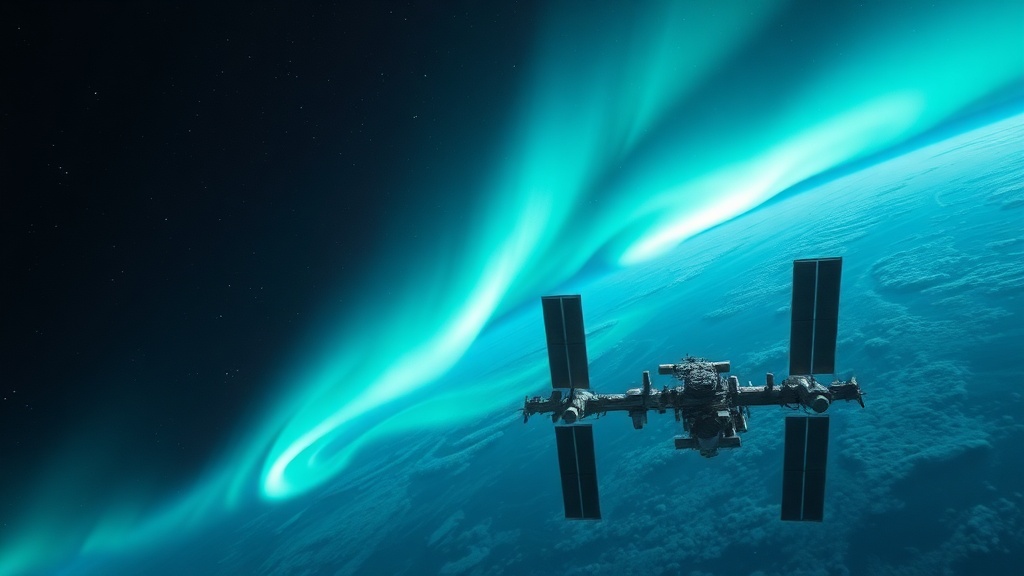
Cosmic Colors: Aurora Dazzles from ISS Orbit

Aurora lights, shimmering over Earth, were recently filmed from the International Space Station by cosmonaut Sergey Kud-Sverchkov. This breathtaking phenomenon occurs when high-speed charged particles from solar storms collide with gases in our planet's atmosphere.

The most common color observed in auroras is green. However, other hues, such as pink and red, can also be visible depending on the atmospheric conditions and the types of gases involved.

During the strongest solar storm in two decades, which occurred recently relative to January 21, 2026, Kud-Sverchkov noted an abundance of red light. He poetically described the experience, stating it felt like 'we were literally sailing inside that light,' highlighting the immersive nature of the display.

Disclaimer: This story has been auto-aggregated and auto-summarised by a computer program. This story has not been edited or created by the Feedzop team.
Cosmonaut Sergey Kud-Sverchkov filmed aurora lights shimmering over Earth from the International Space Station.
Aurora lights are caused by solar storms emitting charged particles that collide with gases in Earth's atmosphere.
During the recent strong solar storm, abundant red glows were visible, alongside the typical green and other possible colors.

Read more news on

Scienceside-arrow
trending

CFTC modernizes crypto regulations

trending

Texas winter storm watch

trending

D.C. weekend winter storm

trending

Apple TV service disruption

trending

Earthquake near Elgin, SC

trending

Mets acquire Luis Robert Jr.

trending

Louisville schools closed due weather

trending

JCPS bus crash reported

trending

Artemis II rocket on pad

You may also like

ISS Crew Safe Amidst Major Solar Storm

20 hours ago • 18 reads

article image

Tooth Glue and IVs: Space Medicine's Reality

15 Jan • 41 reads

article image

New Satellites Launch Dec 28: Faster Data, Longer Life

26 Dec, 2025 • 133 reads

article image

ISS sees 16 sunrises daily: Earth's longest night a blur

22 Dec, 2025 • 111 reads

article image

Cosmic Welcome: ISS Crew Bakes Cake for New Arrivals

28 Nov, 2025 • 256 reads

article image